
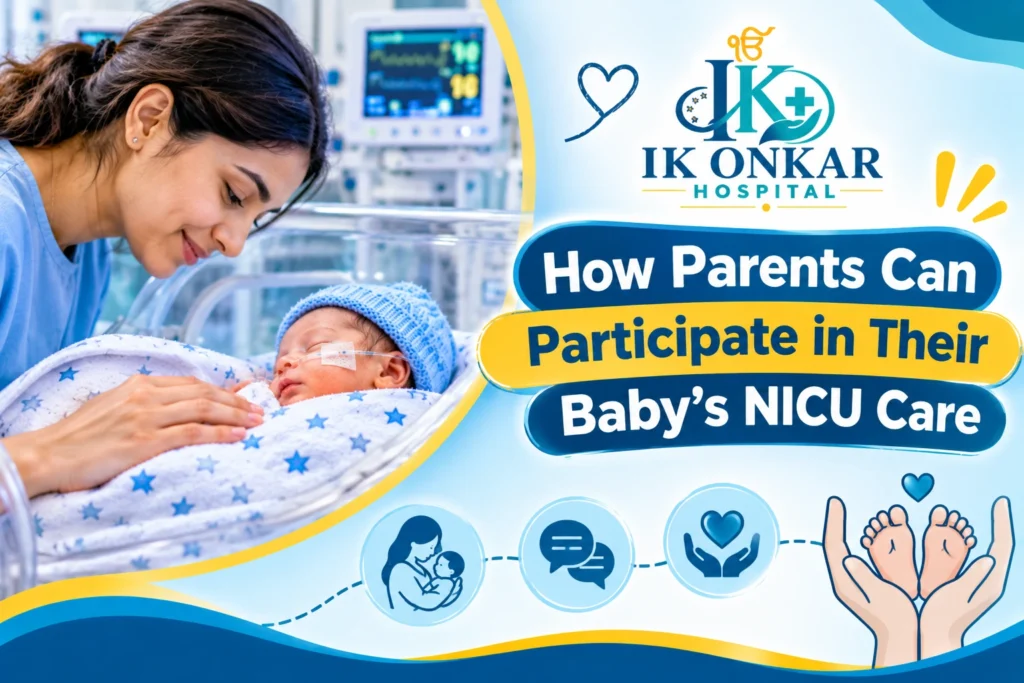
When a newborn goes to the NICU, parents often feel worried. Machines and monitors can look scary at first. However, the Parents Role in NICU Care is still very important. In fact, a baby benefits a lot from a parent’s presence.
Parents can bond with the baby and help with feeding. They can also follow hygiene rules and talk with the doctors. Of course, the exact tasks depend on the baby’s health. This guide explains how mothers, fathers, and family members can help.
Why Is NICU Parent Involvement Important?
NICU Parent Involvement means including parents in the baby’s care and decisions. As a result, parents understand their baby’s needs better. Slowly, they also feel more confident.
Moreover, it builds a strong bond between parent and baby. It also makes the move from hospital to home easier. The World Health Organization (WHO) supports family involvement in Premature Baby Care. It also recommends Kangaroo Mother Care and the mother’s own milk.
NICU Parent Involvement may include these steps:
- Talking softly and giving gentle touch when allowed.
- Also, helping with feeding and expressing breast milk.
- Learning to change nappies and do routine care.
- Next, practising Kangaroo Mother Care with guidance.
- Asking questions about treatment and progress.
- Finally, learning warning signs and discharge steps.
Still, not every activity suits every baby. Therefore, the NICU team decides what is safe.
What Is the Parents Role in NICU Care?
The Parents Role in NICU Care can start with small steps. Even a baby on monitors can sense a parent nearby. Here are the main ways to help.
Talk, Touch, and Bond
A NICU stay does not stop you from bonding. In fact, gentle contact is often possible inside an incubator. If the team agrees, you can try these things:
- Speak softly to your baby.
- Sing or read in a calm voice.
- For example, place a hand gently on the baby.
- Make eye contact when the baby is awake.
- Then notice how the baby reacts to sound and touch.
Premature babies are sensitive to light and noise. Therefore, keep every interaction calm. Also, ask the nurse when touching is safe.
Learn Safe Handling
Premature Baby Care needs careful handling. Warmth, breathing, and feeding can change quickly. For this reason, ask the nurse to show you the right method first.
You should learn these points:
- How to support the baby’s head and body.
- When handling should be limited.
- Besides that, how to spot signs of stress.
- How to position the baby safely.
- Moreover, how to stay careful around tubes and monitors.
Never touch machines, feeding tubes, or oxygen support yourself.
Join Daily Care When Allowed
As your baby becomes stable, you may help with simple tasks. For example, you can change nappies or clean the skin as shown. Similarly, you can help with positioning and comforting.
However, if the baby is unwell, the staff may do most of the care. This is normal. Your turn will come as the baby improves.
Kangaroo Mother Care: Skin-to-Skin Support
Kangaroo Mother Care (KMC) is a key part of Premature Baby Care. In this method, the baby lies upright on the caregiver’s bare chest. The baby is held safely in place. Doctors use it for preterm and low-birth-weight babies when their condition allows.
The baby’s face and airway must always stay clear. Besides that, Kangaroo Mother Care helps in these ways:
- It keeps the baby warm.
- In addition, it supports breastfeeding.
- It builds the parent-baby bond.
- As a result, parents feel more confident.
WHO recommends KMC for these babies. Still, the right time and method depend on the baby’s health.
How to Practise Kangaroo Mother Care
First, wait for the team’s go-ahead. Then follow these steps:
- Check that the baby is ready for skin-to-skin contact.
- Next, wash your hands and follow the unit’s hygiene rules.
- Wear clothes that allow chest-to-chest contact.
- After that, let a trained nurse help you position the baby.
- Keep the baby’s face visible and the airway clear.
- Finally, follow the advised time and monitoring rules.
Fathers and other approved caregivers can also give skin-to-skin care. Meanwhile, nobody should start or stop a session without the team’s advice. In addition, babies on breathing support may need extra care.
Newborn Feeding Support and Breastfeeding Guidance
Feeding is a big part of Premature Baby Care. Some babies can breastfeed directly. Others are too small or too weak, so they need extra help. Newborn Feeding Support is therefore a vital part of NICU care.
The doctors choose the safest feeding method. To decide, they check the baby’s maturity, swallowing, and breathing.
Expressing and Giving Breast Milk
If direct feeding is not possible, mothers can express milk. The team can teach how to express, label, store, and carry the milk. Good Breastfeeding Guidance makes this much easier.
You can ask for help with these topics:
- Hand expression or using a breast pump.
- Also, building a regular expression routine.
- Clean containers and milk labels.
- Besides that, safe storage and transport.
- Feeding times and the baby’s milk needs.
The mother’s own milk is best for preterm babies. If it is not available, the doctors can suggest other options.
When Direct Breastfeeding Is Not Possible
Some babies first get expressed milk through a feeding tube. In that case, parents can still take part. For example, you can learn how the milk is given. You can also ask when direct breastfeeding may start.
However, do not change the amount, timing, or method of feeds. Likewise, never give water, formula, or supplements on your own.
Be Patient With Feeding
Premature babies need time to learn to suck, swallow, and breathe together. So, feeding skills grow slowly. Therefore, ask the team about feeding cues and signs of tiredness.
Also, avoid comparing your baby with others. After all, every baby moves at a different pace.
How Can Fathers and Family Help?
NICU care should not fall on the mother alone. Fathers, partners, and other approved family members can help too. Depending on hospital rules, they can do the following:
- Talk softly to the baby.
- Also, give approved skin-to-skin care.
- Help with routine care after training.
- In addition, support the mother with expressing milk and rest.
- Join talks about the baby’s progress.
- Finally, arrange travel, visits, and follow-up care.
All visitors must follow the same hygiene rules. Besides that, visiting rules may differ between hospitals.
Hygiene and Infection Prevention
Premature babies catch infections easily. Therefore, good hygiene is one of the best ways to help. Before you enter the NICU or touch your baby, keep these points in mind:
- Wash or sanitise your hands as told.
- Then wear a gown or mask if asked.
- Keep your belongings away from the baby’s area.
- Also, avoid touching equipment without need.
- Tell the hospital first if you feel sick.
- Lastly, follow the visitor rules.
If you see a change in breathing, colour, activity, or feeding, tell the staff right away. Do not wait for the next routine check.
How to Talk With the NICU Team
Clear talks help parents understand the baby’s condition. As a result, they can join decisions with more confidence. Here are some useful questions:
- Why does my baby need NICU care?
- Also, what treatment is going on now?
- Is my baby ready for holding or KMC?
- Besides that, what is the feeding plan?
- Which changes should I report at once?
- Finally, what must happen before discharge?
It helps to write your questions down before each update. Moreover, if a medical word is unclear, ask the team to explain it simply. Also, share details about the pregnancy, birth, and feeding. This helps the team know your baby’s history.
Getting Ready for Discharge
Discharge planning should start early. Parents need clear steps and some practice before going home. Therefore, ask the team about these points:
- Feeding method, timing, and special instructions.
- Also, safe sleep and positioning.
- Warmth and general care.
- In addition, medicines and how to give them.
- Follow-up visits and growth checks.
- Finally, hearing, eye, or development tests.
Get medical help fast if your baby has trouble breathing or is hard to wake. The same applies to poor feeding, seizures, or blue or grey skin. Above all, do not try home remedies first.
NICU Care in Faridkot
Families who search for NICU Care in Faridkot often want more than a list of services. They also want to know how they can take part in their baby’s care.
Ik Onkar Hospital is located in the Former Dashmesh Hospital building on Talwandi Road, Faridkot, Punjab. Before choosing, please call the hospital directly. Then confirm the current newborn services, visiting rules, feeding support, and KMC availability.
Here are some useful questions to ask:
- Can parents join routine newborn care?
- Also, is breastfeeding or expressed milk support available?
- Can eligible babies receive Kangaroo Mother Care?
- Besides that, how will we get updates on the baby’s progress?
- Finally, what specialist help is available if my baby needs more treatment?
Always confirm each service with the hospital. After all, the right care setting depends on your baby’s needs.
Conclusion
The Parents Role in NICU Care goes far beyond visiting. Parents can support bonding, feeding, hygiene, daily care, and discharge planning. In particular, Kangaroo Mother Care and Breastfeeding Guidance help a lot when they suit the baby.
If your newborn is in intensive care, ask the team how you can help safely. Small, regular actions make parents feel closer to their baby. Above all, the baby’s medical needs must stay at the centre of every decision.
This article is for general education. It does not replace advice from your baby’s doctors.
Stay Connected with Ikonkar Hospital
Stay connected with Ikonkar Hospital for healthcare updates, health awareness information, patient care guidance, and useful wellness tips. Visit our website to learn more about our hospital and services. Follow Ikonkar Hospital on Facebook and Instagram for the latest health updates, hospital news, and informative healthcare content.