
General and Laparoscopic Surgery
General and Laparoscopic Surgery in Faridkot
Many surgical problems begin with a symptom rather than a decision to operate. A swelling in the groin, gallstone pain, recurrent abdominal discomfort or bleeding from piles should first be assessed properly. Ik Onkar Hospital provides general surgical consultation and selected open and laparoscopic procedures, supported by modular operation theatres and anaesthesia services.
At the first visit, the surgeon examines the patient, reviews available investigations and explains whether treatment can be medical, minimally invasive or open surgery. Not every surgical symptom needs an operation, and the right plan depends on what the assessment finds.
Laparoscopic techniques use small incisions for suitable operations. However, the safest method depends on the diagnosis, previous operations, associated illness and the surgeon’s assessment.
Choosing between laparoscopic and open surgery
The surgeon considers these points before suggesting a method:
- The diagnosis and how far the condition has progressed
- Any previous abdominal operations
- Other illnesses the patient may have
- The surgeon's own assessment after examination
Conditions Assessed in General Surgery in Faridkot
Our surgical team sees patients with the following problems and advises on the next step after examination.
Gallbladder disease and gallstones
Pain or discomfort that needs specialist assessment before a treatment decision.
Hernias and abdominal wall swellings
Lumps in the groin, navel or abdominal wall that should be examined by a surgeon.
Appendicitis and acute abdominal conditions
Sudden or severe abdominal pain that needs prompt medical assessment.
Piles, fissures and anorectal problems
Haemorrhoids, fissures and selected conditions around the anus.
Recurrent abdominal discomfort
Ongoing symptoms without a clear cause that call for proper evaluation.
Other general surgical conditions
Conditions within the hospital’s approved operative scope, as advised by the surgeon.
What Happens During Your Surgical Consultation
A clear path helps patients and families know what to expect from the first visit onwards.
Examination
The surgeon listens to your symptoms, history and concerns, and examines you.
Review of reports
Previous ultrasound, scans, endoscopy reports and prescriptions are reviewed. Further tests are advised only if needed.
Treatment options explained
You are told whether medicines, an outpatient procedure, laparoscopic surgery or open surgery is suitable for your condition.
Planning and anaesthesia
If surgery is advised, the team plans the procedure with anaesthesia services and explains it in simple language.
Recovery and follow-up
For eligible beneficiaries, the scheme coordinator confirms the package before planned treatment.
Piles and Haemorrhoids Treatment in Faridkot
Bleeding, pain or swelling around the anus is not always caused by piles. The surgeon may need to check for fissures, infection or other conditions before deciding on treatment.
Depending on the findings, care can include changes in bowel habits, medicines, outpatient procedures or surgery. The plan is decided for each patient after examination.
Do not ignore anal bleeding
Because several conditions can cause similar symptoms, it is safer to have bleeding or persistent pain examined by a surgeon rather than assume the cause.
Operation Theatre and Anaesthesia Support
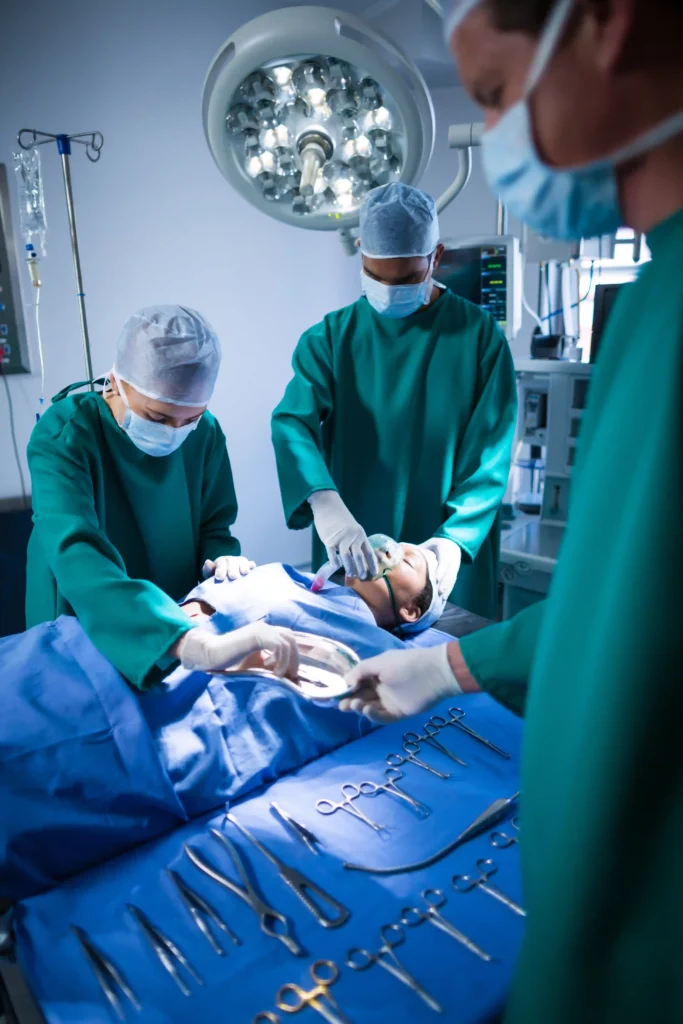
Surgical procedures at Ik Onkar Hospital are carried out in modular operation theatres with anaesthesia services available.
Modular operation theatres
Clean, safety-focused theatres for selected open and laparoscopic procedures.
Anaesthesia services
Anaesthetists support patients before, during and after the procedure.
Critical care backup
Patients who need closer monitoring can be supported by our MICU.
Surgical Care Under One Roof in Faridkot
From the first consultation to the operation theatre, surgical care at Ik Onkar Hospital is planned in one place, so patients and families do not have to move between facilities.
- Surgical OPD consultation with a general surgeon
- Modular operation theatres and anaesthesia services
- 24x7 emergency department for urgent abdominal problems
- Billing team support for estimates and scheme checks
Cashless Treatment and Cost Information
Eligible general surgical and haemorrhoid procedures may be cashless under approved packages, subject to scheme requirements. Please bring your card and call the hospital to check whether your case is covered.
If a planned procedure is not covered, the billing team will provide an estimate and explain the hospital’s applicable reduced-price policy in writing.
What to bring to your OPD visit
- Previous ultrasound or scan reports
- Endoscopy reports, if done
- Old prescriptions and medicine list
- Ayushman Bharat & Mukh Mantri Sehat Yojana card, if you have one
FAQs
Questions people often ask
Something else on your mind?