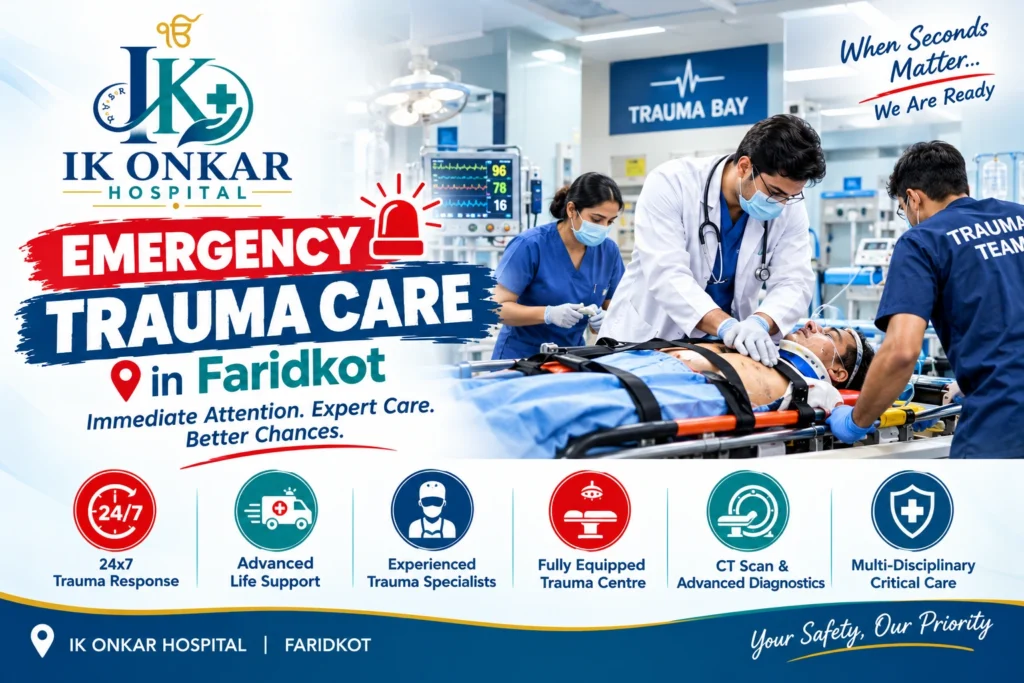
Emergency trauma care in Faridkot is vital when a serious injury happens. Some injuries look small at first. However, they can be risky inside the body. That is why quick help matters after a road accident, a fall, or a work injury.
In this blog, you will learn what emergency trauma care is. You will also learn the warning signs and common injuries. Finally, you will learn what to do while you wait for help. As a result, you can act fast in an emergency.
What Is Emergency Trauma Care?
Emergency trauma care is urgent help for a person with a sudden injury. First, doctors look for problems that can threaten life. For example, they check breathing, blood flow, bleeding, and the brain.
Emergency trauma care in Faridkot may include a quick check and bleeding control. In addition, doctors may treat wounds, look for broken bones, and run tests. They may also keep the patient under watch. If needed, they may send the patient to a specialist. Of course, the treatment depends on the injury.
Why Quick Trauma Care Matters After an Accident
Some injuries are easy to see. Others show up later. For instance, a person may stay awake after a crash. Still, they may have a hidden injury to the head, chest, belly, or spine.
Therefore, timely trauma care in Faridkot can make a big difference. A doctor can find hidden injuries early. Then they can plan the right tests and treatment.
Quick help is vital after a bad road accident or a big fall. Similarly, it matters after a head or neck injury. It also matters if there is heavy bleeding or a broken bone. Likewise, get help if the person faints or feels weak or numb. So if the injury may be serious, do not guess at home. Instead, get a medical check.
Common Injuries That Need Emergency Trauma Care
Trauma can hurt any part of the body. So the right step depends on the injury and the signs.
Head and Brain Injuries
Head injuries can be mild or serious. However, some signs need help right away. These include fainting, rising confusion, and a bad headache. Likewise, watch for vomiting again and again. Seizures, slurred speech, and extreme sleepiness are also warning signs. In these cases, a doctor should check the person at once.
Fractures and Dislocations
Falls and accidents can break a bone. They can also push a joint out of place. Usually, the person has strong pain, swelling, and bruises. Besides that, the limb may look odd. The person may also be unable to put weight on it. So do not move the limb until a doctor checks it.
Chest and Belly Injuries
A hard hit can hurt the chest or belly. Sometimes the damage is not visible. Because of this, watch for trouble breathing, strong pain, or dizziness. Similarly, fainting or growing weakness needs a quick check. Heavy bleeding is also a danger sign. Therefore, a doctor should check these symptoms.
Bleeding and Soft-Tissue Injuries
Cuts and wounds can be small or serious. However, heavy bleeding needs urgent care. Meanwhile, you can give basic first aid. Do this while help is on the way.
Spine and Neck Injuries
A hard hit can hurt the neck or spine. Therefore, take severe neck or back pain seriously. Weakness or numbness is also a warning sign. Moreover, do not move the person unless there is danger nearby.
Emergency Trauma Care in Faridkot After a Road Accident
Road accidents often cause more than one injury. For example, a person may have a cut, a broken bone, and a head injury together.
Emergency trauma care in Faridkot after a road accident usually starts with a quick check. Next, doctors keep the patient stable. After that, they examine the body and order tests. Then they start treatment.
However, do not assume a person is fine because they can walk or talk. Many injuries need a proper check. So if you are worried, get help at once.
Warning Signs That Need Medical Help Right Away
After an accident, get urgent help if the person has trouble breathing. Do the same if bleeding does not stop. In addition, call for help if the person faints or has a seizure. Similarly, a bad headache after a head injury is a serious sign. So are repeated vomiting, confusion, or strange behaviour.
Moreover, strong chest or belly pain needs a quick check. The same is true for weakness, numbness, or severe neck and back pain. Finally, a limb with an odd shape needs urgent care. So does trouble moving or extreme weakness.
These signs do not point to one exact cause. Still, they show the need for a quick check.
How Doctors Check Trauma Injuries
Doctors who give emergency trauma care in Faridkot start with a fast check of the patient.
First Emergency Check
First, doctors check the airway, breathing, and blood flow. Then they check the brain, bleeding, and visible injuries. As a result, they can spot life-threatening problems fast.
Physical Exam
Next, doctors examine the injured areas. They may also ask how and when the injury happened. In addition, they may ask about symptoms and past health problems. They may also ask about medicines and allergies. These answers help doctors plan the next step.
Tests
Some patients need tests. For example, doctors may advise X-rays, ultrasound, CT scans, or blood tests. However, not every patient needs every test. Instead, the doctor decides based on the case.
How Injuries Are Treated
Treatment depends on the injury. For instance, doctors may clean and cover wounds. They may also stop bleeding. In addition, they may keep an injured limb still. Fractures and dislocations may need special care. Pain relief and close watch are also common. If needed, surgery or a specialist visit may follow. Therefore, a qualified doctor must choose the right treatment.
What to Do While Waiting for Help
If an accident has just happened, first make sure the area is safe. Then call emergency services. Also, avoid moving a badly hurt person.
Do not pull out an object stuck in a wound. Instead, press on the bleeding area if it is safe. Meanwhile, keep the person calm. Follow the advice of emergency staff. Above all, do not delay a check-up just because the person looks fine.
However, if the scene is unsafe, move away from danger.
When Should You Seek Emergency Trauma Care?
You should seek emergency trauma care in Faridkot after any serious injury. This is true most of all when the head, spine, chest, or belly may be hurt.
Get help at once for heavy bleeding or trouble breathing. Do the same for fainting, seizures, severe pain, or a limb with an odd shape. Moreover, if you are unsure, it is safer to get a check.
Trauma Care in Faridkot for Patients and Families
Many families search for trauma care in Faridkot after an accident. Fast access to a check is very important at that time.
Ikonkar Hospital is located at Former Dashmesh Hospital Building, Talwandi Road, Faridkot, Punjab. Also, it lists emergency trauma care among its services. Therefore, you can call the hospital for details. Ask about emergency services, availability, and admission.
In a serious emergency, however, do not waste time searching online. Instead, get help right away.
Conclusion
Serious injuries need quick and proper care. After a road accident, fall, or other injury, do not ignore the warning signs. For example, trouble breathing, heavy bleeding, fainting, severe pain, or a suspected fracture all need attention.
Emergency trauma care in Faridkot helps patients get a timely check. As a result, doctors can choose the right treatment for each person.
This article gives general health information. However, it does not replace an exam or personal advice from a qualified healthcare professional.
Pingback: Accident Emergency Care: What to Do After an Accident