
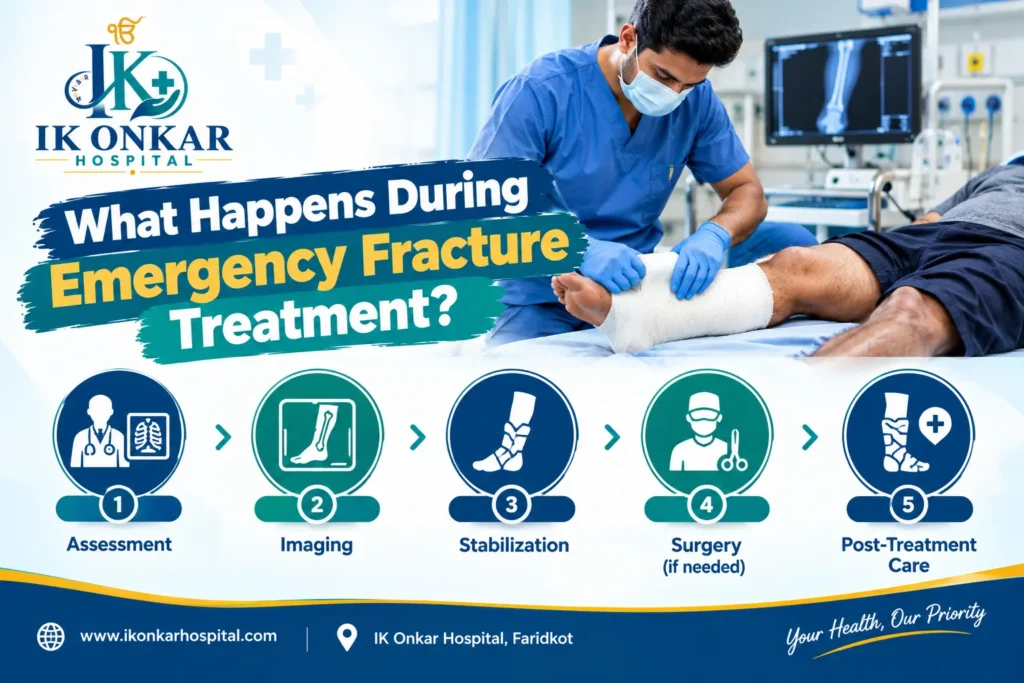
A broken bone needs quick medical care. Emergency fracture treatment helps doctors find the type of break. It also protects the injury and checks for other problems. First, the team checks your overall health. Then they examine the injured limb, ease the pain, and arrange imaging. After that, you may need a splint, a cast, bone repositioning, or surgery.
Knowing what to expect makes a hard day easier. Therefore, this guide explains the main steps of fracture care. It also covers what happens in an orthopedic emergency. Finally, it shares what to do before and after you reach the hospital.
What Is Emergency Fracture Treatment?
Emergency fracture treatment is the first care for a bone that may be broken. Its goals are simple. Doctors look for serious injuries and protect the break. They also check blood flow and nerves, ease pain, and plan the next step.
Fractures happen after road accidents, falls, sports injuries, or hard blows. Sometimes a small injury can break a bone. This happens most often when osteoporosis has weakened it.
A fracture can be closed or open. In a closed fracture, the skin stays whole. In an open fracture, a wound reaches the broken bone. Also, some fractures stay in line. Others shift and need repositioning.
Treatment depends on the bone and the place of the break. It also depends on how stable the break is. Age and general health matter too. In addition, doctors check whether nearby tissue has damage.
What Happens First When You Arrive at the Hospital?
The first step is an initial check. The team looks for life-threatening injuries. They also look for a single broken bone or other injuries that need quick care.
1. Initial Assessment and Injury History
A healthcare professional asks how and when you got hurt. They also ask about your symptoms, past injuries, health problems, allergies, and medicines.
After a serious accident or fall, the team checks your breathing, circulation, and alertness. They look for other injuries as well.
Heavy bleeding, breathing trouble, low alertness, or signs of shock need care first. These problems come before routine fracture tests.
2. Checking Blood Flow and Nerve Function
Next, the clinician examines the injured area. They also check blood flow and nerves below the injury.
For example, they may check skin colour and warmth. They may feel for a pulse and test touch. When it is safe, they may ask you to move your fingers or toes.
These checks show if the injury has hurt blood vessels or nerves. They matter most when a limb looks bent, swells badly, feels numb, or turns cold.
The team repeats the checks after a splint, cast, or reduction. So tell them right away if numbness, strong pain, or colour changes start or get worse.
3. Pain Relief and First Support
Pain relief is a key part of emergency fracture treatment. The best choice depends on your age, injury, health history, and pain level.
A clinician may give or suggest safe pain relief. They may also support the area with a temporary splint or sling. This limits movement and lowers the risk of more harm.
If the bone looks out of place, do not try to straighten it. Only a trained healthcare professional should move it back.
How Does a Doctor Diagnose a Fracture?
Doctors usually combine a physical exam with imaging. An X-ray often shows the break and where it is. It also shows whether the bone pieces line up.
During the exam, the doctor checks pain on touch, swelling, movement, and skin damage. They also test nearby nerves and blood vessels. In addition, they may check close joints, because one injury can affect several parts.
Some cases need more imaging:
- CT scan: Gives detailed pictures of complex breaks, especially near joints.
- MRI: Can show some breaks and soft-tissue injuries that an X-ray misses.
- Repeat exam or imaging: Helps when symptoms stay worrying after an unclear X-ray.
However, not every injury needs every test. The team picks tests based on the suspected break and your findings.
What Treatment Might a Broken Bone Need?
Fracture treatment protects the injury and helps it heal. When needed, it also puts the bone back in line. Importantly, not every fracture needs surgery. Doctors decide after they study the specific injury.
Splinting and Casting
A splint supports the injured area. It leaves some room for swelling. Doctors may use it in the emergency room or as part of longer treatment.
A cast gives fuller support for some fractures. It holds the bone in place while it heals.
The choice depends on the break, the swelling, and how stable the bone is. Your doctor makes the final call. Meanwhile, keep the cast dry. Do not put weight on the limb unless your doctor allows it. Also, attend all follow-up visits.
Fracture Reduction
Fracture reduction means moving shifted bone pieces back into place.
In closed reduction, the doctor moves the bone without a surgical cut. They may use pain relief, numbing medicine, or sedation. The choice depends on the injury and the procedure.
Afterward, the team takes an X-ray to check the position. Then they apply a splint or cast to hold it.
However, closed reduction does not work for every shifted bone. Some injuries need surgery to fix the position and keep it.
When Is Surgery Necessary?
Doctors consider surgery when a bone is unstable, badly shifted, open, or hard to hold in place. Breaks that reach a joint may also need surgery. So may breaks that damage blood vessels.
Depending on the injury, the surgeon may use plates, screws, rods, or pins. These hold the bone pieces together.
The timing and type of surgery depend on the break, the tissue damage, and any dirt in the wound. Your overall health matters too. In some cases, the team must first treat other urgent problems.
Treatment for an Open Fracture
An open fracture needs urgent care because the wound can cause infection.
Treatment may include covering the wound and giving antibiotics. The team also checks your tetanus protection. Surgeons clean damaged or dirty tissue and steady the bone. The exact plan depends on the wound and how severe it is.
Do not push exposed bone back into the wound. Likewise, do not try to clean a deep wound yourself. Instead, cover it with a clean dressing and call for emergency help.
How Long Does Emergency Fracture Treatment Take?
The time varies. It depends on how severe the injury is and how many injuries you have. It also depends on the tests you need and whether you need a procedure or surgery. No single timeline fits every fracture.
A simple injury may need only an exam, an X-ray, a splint or cast, and follow-up advice. In contrast, a complex break or major accident may need more tests. It may also need a specialist, a hospital stay, or surgery.
Bone healing takes much longer than the first visit. Recovery depends on the bone and the type of break. Your age, your health, and any problems also play a part. Your doctor can give a personal estimate after the exam.
What Should You Do Before Reaching the Hospital?
If you suspect a fracture, protect the injured area while you arrange care.
- Stop the activity. Do not ask the injured person to walk or test the limb.
- Keep the area still. Support it in the position you found it. Do not try to straighten it.
- Cover an open wound. Use a clean dressing. Do not press on exposed bone.
- Control bleeding safely. Press gently on the skin around an ordinary wound. Never press on exposed bone.
- Use a wrapped cold pack. For a closed injury, a cold pack in cloth may reduce swelling. Never put ice directly on the skin.
- Call for the right help. Call emergency services for a major injury, heavy bleeding, a suspected spine injury, breathing problems, or signs of shock.
In India, dial 112 in an emergency. Also avoid moving the person if they may have a neck, back, hip, or pelvic injury. Follow the responders’ instructions.
What Happens After Emergency Fracture Care?
Emergency fracture treatment is only the start. Follow-up care lets doctors track healing, pain, swelling, and movement.
After treatment, you may need to:
- Attend follow-up exams and X-rays.
- Keep the cast or splint on as told.
- Avoid lifting, walking, or putting weight on the limb until your doctor says it is safe.
- Follow your pain-relief plan.
- Start physiotherapy when advised.
- Follow wound-care steps after surgery or an open fracture.
Get urgent help if the limb becomes numb, cold, pale, or blue. Likewise, seek help if pain and swelling rise sharply. A cast that feels too tight or causes new tingling also needs quick care.
Do not remove a cast or touch metal implants. Also, do not restart hard activity without medical advice.
When Is a Fracture an Orthopedic Emergency?
A suspected fracture is an orthopedic emergency when it may harm bones, nerves, blood vessels, or organs.
Seek emergency help for:
- Bone visible through the skin, or an open wound near a suspected break.
- Heavy bleeding that does not stop.
- A limb that looks bent or twisted after an injury.
- New numbness, or pale, blue, or cold skin below the injury.
- A suspected head, neck, back, hip, pelvis, or thigh fracture after major trauma.
- Faintness, confusion, poor response, or trouble breathing after an injury.
Children also need prompt care. See a doctor if a child will not use an arm or leg. Do the same if a child cannot put weight on a leg after a fall, or has strong pain or swelling. A fracture can occur without a clear bend.
Do not delay care to look for a particular specialist. Likewise, do not wait for symptoms to improve.
Emergency Fracture Care in Faridkot
People in Faridkot and nearby areas may need care after a road accident, fall, sports injury, or other trauma. Knowing where to ask for help makes choices easier in a stressful moment.
Ik Onkar Hospital is at the Former Dashmesh Hospital Building, Talwandi Road, Faridkot, Punjab. If you need fracture treatment Faridkot, contact the hospital. Ask about fracture checks, tests, and treatment options.
When you choose where to go, think about how severe the injury is. Consider whether you need first aid, imaging, a specialist, or surgery. For a major injury, call emergency services first. Do not lose time comparing hospitals.
Treatment depends on the findings. Therefore, you should get a personal exam, clear next steps, and warning signs to watch for.
Conclusion
Emergency fracture treatment focuses on checking the injury, protecting the bone, easing pain, and finding problems early. Depending on the break, care may include X-rays, a splint, a cast, reduction, or surgery.
Knowing what to expect helps patients and families prepare. If you suspect a serious fracture, seek emergency help without delay.
Patients in Faridkot can contact Ik Onkar Hospital to ask about fracture checks and available services. This article gives general health information. It does not replace a medical exam or treatment advice.