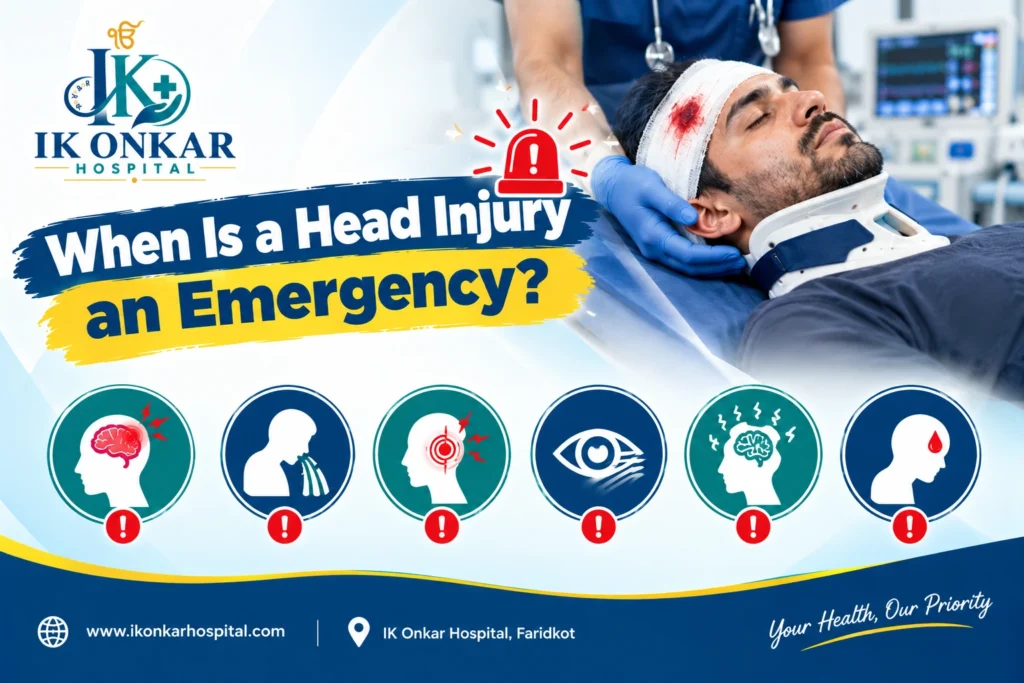
A head injury emergency can begin with a small bump. However, some injuries harm the brain. The danger starts when warning signs appear. These include a worsening headache, repeated vomiting, seizures, more confusion, weakness, or trouble waking up. Therefore, these signs need urgent care, even with no wound or bleeding.
Head injuries happen after road accidents, falls, sports, or hard blows. Some symptoms show up at once. Others appear hours or days later. So, knowing the warning signs helps families act fast.
This guide explains the signs of a severe head injury. It also covers first aid and how doctors check head trauma. Finally, it shows how to choose an emergency hospital Faridkot residents can reach fast.
What Is a Head Injury?
A head injury is damage to the scalp, skull, or brain. It can come from a fall, a crash, or a sudden jerk of the head. Some injuries are mild. However, others cause a brain injury (TBI).
Common types include:
Scalp injuries: Cuts, bruises, or swelling on the skin of the head.
Concussion: A mild brain injury. It can affect memory, balance, focus, mood, and sleep.
Skull fracture: A break in the bones around the brain.
Bleeding inside the skull: It can press on the brain. It can also put life at risk.
The size of a bump does not show how bad the injury is. For example, a person can have a severe head injury with no heavy bleeding or open wound. Because of this, every blow to the head needs care.
Head Injury Emergency Signs That Need Immediate Attention
Get help right away if any of these signs appear after a head injury. Do not wait for all of them. Also, do not assume the person is safe because they looked fine at first. Every minute counts.
Loss of Consciousness or Difficulty Waking Up
Fainting, deep sleepiness, or trouble waking up can point to a severe head injury. Even if the person wakes up fast, they still need a check. However, if they cannot be woken, call for help at once. This is a clear emergency.
Worsening Headache or Repeated Vomiting
A mild headache is common after a small knock. However, a headache that keeps getting worse is an emergency sign. Repeated vomiting is also a red flag. Therefore, do not blame it on tiredness, stress, or a bad stomach.
Seizures, Confusion, or Unusual Behaviour
A seizure after a head injury is an emergency. In addition, watch for confusion, anger, and strange acts. These trauma symptoms point to a severe head injury until a doctor says otherwise. The person may not know familiar faces. Moreover, they may not notice these changes. Therefore, family should watch them closely.
Weakness, Numbness, or Speech Problems
New weakness, numbness, or poor balance can signal nerve damage. Similarly, slurred speech and vision changes are warning signs of a head injury emergency. Never ignore these signs after a blow to the head. Instead, call for help. Do not ask the person to walk or drive to the hospital.
Signs of a Skull Fracture or Serious Trauma
Some signs suggest a skull fracture and a severe head injury. For example, watch for:
Clear fluid or blood from the nose or ears.
Bruises behind the ears or around the eyes, with no direct blow there.
A dent in the skull.
An open wound with an object stuck in it.
A major road accident or a fall from a height.
Do not press on a suspected fracture. Also, do not pull out any stuck object. Instead, keep the person still and call for help. After that, reach an emergency hospital Faridkot offers as fast as you safely can.
Common Trauma Symptoms After a Head Injury
Not every head injury is an emergency. Still, watch the person with care. Common symptoms include:
Headache or pressure in the head.
Dizziness or poor balance.
Nausea.
Blurred vision, or pain from light and noise.
Unusual tiredness.
Trouble focusing or remembering.
Anger, worry, or mood changes.
Changes in sleep.
These symptoms can occur with a concussion. However, they cannot prove it alone. Therefore, anyone with such symptoms needs a doctor’s advice. If they get worse, it becomes a head injury emergency. In that case, go to an emergency hospital Faridkot has nearby.
Head Injury Warning Signs in Babies and Children
Young children cannot say how they feel. Instead, a baby may feed, cry, or move in a new way. As a result, parents should watch for small changes. Get help if a child has repeated vomiting, seizures, deep sleepiness, confusion, weakness, or trouble waking. These are signs of a head injury emergency in a child.
Other warning signs include:
Crying that cannot be calmed.
Refusing to feed or eat after the injury.
Unusual anger or fuss.
Trouble walking or keeping balance.
A large swelling or open wound, mainly in a young baby.
A child does not need to faint to have a severe head injury. So, if you feel worried, get a quick check. Do not just watch at home.
What Should You Do Immediately After a Head Injury?
If the person shows any serious warning sign, call for help first. Then follow these steps while you wait:
Check breathing and response. Follow the call handler’s advice. If the person is not breathing well, start CPR if you know how.
Keep the head and neck still. A hard hit can also hurt the neck. So, avoid extra movement.
Stop bleeding gently. For a small scalp cut, press lightly with a clean cloth. However, do not press over a suspected fracture or a stuck object.
Give no food or drink. This applies if the person is confused, sleepy, or vomiting.
Stay with the person. Meanwhile, watch their breathing and alertness until help comes.
Do not let them drive. Someone with a possible serious injury must not drive.
In India, dial 112 for help. However, if the spine may be hurt, do not move the person unless they are in danger. Then, take the person to the nearest emergency hospital Faridkot has.
Can Head Injury Symptoms Appear Later?
Yes, they can. Concussion and brain injury symptoms may appear hours or days after the hit. For instance, a person who seems fine may later get a worse headache, vomiting, or confusion. These late trauma symptoms mean a head injury emergency, so get care at once.
People on blood thinners or with bleeding problems face a higher risk of bleeding. Therefore, they should get quick medical advice after any head injury. Also, do not treat a missing wound, mild pain, or no fainting as proof of a safe outcome.
How Are Head Injuries Diagnosed and Treated?
Doctors first ask about the accident and the person’s health history. Next, they check alertness, memory, pupils, limb strength, and balance. Then, a CT scan may be needed to look for bleeding or a fracture. However, not every injury needs a scan. Doctors decide based on the person’s state and symptoms.
Treatment depends on how bad the injury is:
Minor scalp injury: Wound care and watching.
Concussion: Rest, a slow return to normal life, and follow-up.
Severe head injury: Hospital stay, expert care, or brain surgery.
Also, do not give sleep medicines to a person with a head injury emergency without a doctor’s advice. An emergency hospital Faridkot families choose should be able to do these checks. Please confirm this by phone first.
When Should You Seek Medical Care?
See a doctor soon if you have a lasting headache, dizziness, nausea, or memory problems. This applies even when the symptoms seem mild. Moreover, young children, older adults, and people on blood thinners should be checked sooner.
Go to an emergency hospital Faridkot has at once for any of these signs of a head injury emergency:
Trouble waking up.
Seizures.
Repeated vomiting.
A worsening severe headache.
New weakness or speech problems.
Growing confusion.
A suspected skull fracture.
If you are unsure how bad the injury is, ask a doctor. However, do not wait at home when a serious warning sign is present.
Choosing an Emergency Hospital in Faridkot
People in Faridkot and nearby areas may need quick care after a road accident, fall, or work injury. In such cases, the right emergency hospital Faridkot families choose can save time during a head injury emergency.
Ik Onkar Hospital is at the Former Dashmesh Hospital Building, Talwandi Road, Faridkot, Punjab. Therefore, you can call the hospital to confirm which emergency services are on offer for your case.
When you pick a hospital, think about how bad the injury is. For example, ask if the hospital can do urgent scans and expert checks. Also, confirm its trauma care, because not every hospital offers every service.
For a suspected severe head injury, do not lose time comparing hospitals. Instead, call 112 right away.
Conclusion
Knowing a head injury emergency when you see one helps families act early. Fainting, repeated vomiting, a worsening headache, seizures, confusion, weakness, speech trouble, and signs of a skull fracture all need urgent care.
Some symptoms appear later. So, follow medical advice even if the injury looks minor. Meanwhile, keep the person still and safe, and call for help as soon as a warning sign appears. After that, go to an emergency hospital Faridkot has without delay.
If you live in Faridkot, you can contact Ik Onkar Hospital to ask about injury care. This article gives general health information. However, it does not replace a check by a doctor.