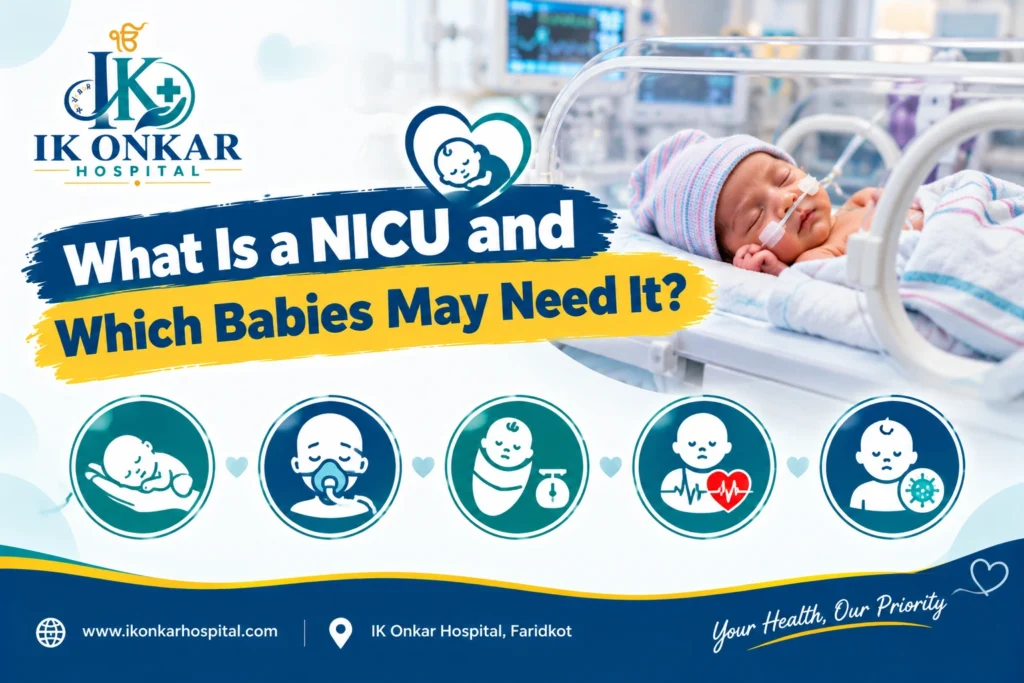
Some newborn babies need more care than a routine check can offer. For example, a baby may be born early, or may struggle to breathe. Others weigh less than expected, while some develop a problem that needs close watching. In such cases, a NICU can give the special care these babies need.
Knowing how a NICU works helps parents feel ready. It also helps them make good choices with the baby’s care team. This guide explains what neonatal intensive care is, which NICU babies need it, and what happens during a stay. In addition, it shows how parents can take part in care and what to ask about NICU Faridkot.
What Is a NICU?
A NICU is a neonatal intensive care unit. It is a special hospital unit for newborns who are premature, very sick, or at risk. Neonatal intensive care includes tools to watch a baby closely. It also supports key body functions, such as breathing, warmth, and feeding.
Newborns are still getting used to life outside the womb. Because of this, some babies need extra help. Their organs may not be fully grown yet. Otherwise, a health problem after birth may affect them.
A NICU team usually includes neonatologists, paediatricians, and nurses. Other health workers may join, depending on the hospital and the baby’s needs.
However, care levels differ from one hospital to another. Not every NICU offers the same treatments. Therefore, the team checks each baby first. Then they decide if the hospital can meet that baby’s needs safely.
Which Babies May Need NICU Care?
NICU babies need closer care than a normal newborn nursery can give. The need depends on the baby’s health, age at birth, weight, and symptoms. It also depends on what the hospital can offer.
1. Premature Babies
A baby born before 37 full weeks is premature. At that stage, the lungs, brain, and gut may not be fully grown.
As a result, some premature babies need help with breathing, feeding, or warmth. Babies born very early are more likely to need neonatal intensive care. Still, each baby is different.
Not every premature baby needs the NICU. The team looks at the baby’s overall health first. Then they decide how much support is needed.
2. Babies With Low Birth Weight
A low birth weight baby weighs less than 2,500 grams. These babies may find it hard to stay warm or feed well. Also, their blood sugar may drop too low.
Some low birth weight babies need special care in the NICU. However, others stay with their mothers under close watch.
Weight alone does not decide NICU admission. Doctors also check age at birth, breathing, warmth, and feeding.
3. Babies With Breathing Difficulties
Some newborns have trouble breathing soon after birth. This can happen because the lungs are not fully grown. It can also result from other health problems.
Warning signs include:
- Fast or hard breathing.
- Grunting with each breath.
- Skin pulling in between or under the ribs.
- Blue or grey colour around the lips or skin.
- Pauses in breathing.
A baby with these signs needs a doctor right away. Depending on the cause, treatment may include oxygen, CPAP, or a ventilator. CPAP means continuous positive airway pressure.
However, not every baby needs all of these. The team picks the support that fits the baby and the hospital’s tools.
4. Babies With Infections or Other Conditions
Newborns can get infections that need quick treatment. Because some infections spread fast, never ignore sudden changes in feeding or behaviour.
NICU babies may also have:
- Severe newborn jaundice.
- Low blood sugar (hypoglycaemia).
- Seizures.
- Certain birth defects.
- Serious feeding trouble or dehydration.
- Heart or other organ problems.
A NICU stay does not always mean a life-threatening illness. In fact, some babies need only short-term watching. Others, though, need more complex care.
5. Babies Who Need Monitoring After Birth Complications
Some babies need extra checks after a hard pregnancy, labour, or delivery. For instance, a baby may have trouble starting to breathe. Similarly, doctors may suspect an injury from low oxygen.
The doctors decide after examining the baby. They then explain which concerns need watching and which tests may help.
What Happens in a NICU?
First, the NICU team examines the baby. Next, they make a care plan. The plan may change as the baby improves or shows new symptoms.
Care may include:
- Continuous monitoring: Staff watch heart rate, breathing, oxygen, and temperature.
- Breathing support: Some babies need oxygen, CPAP, or a ventilator.
- Warmth: An incubator or warmer keeps the baby’s temperature safe.
- Feeding support: Babies who cannot feed well by mouth may get milk through a tube, or nutrition through a vein.
- Medicines and fluids: These depend on the baby’s diagnosis.
- Lab tests: Blood tests help check the baby’s condition.
The team reviews progress often. So parents should ask why each test or treatment is needed. They should also ask what the results mean.
What Equipment Is Used in a NICU?
NICU equipment gives extra help to newborns in the first days or weeks. The tools depend on each baby’s condition.
Common examples include:
- Incubators and warmers: These keep babies warm. Incubators also give a controlled space for small or premature babies.
- Monitors: These track heart rate, breathing, and oxygen level.
- CPAP equipment: It keeps the airways open. Therefore, it can help breathing without a breathing tube.
- Ventilators: These breathe for the baby when needed.
- Feeding tubes and IV lines: These give milk, fluids, nutrition, or medicines.
Monitors do not always mean a baby is getting worse. Instead, ask the team what each device does. Also ask which readings matter most.
How Are NICU Babies Fed?
Feeding depends on the baby’s age, breathing, and health. It also depends on how well the baby can suck, swallow, and breathe together.
Doctors often encourage breast milk when it is safe. This is because it gives key nutrients and protection. If a baby cannot breastfeed, mothers can express milk instead.
Feeding may involve:
- Breastfeeding when the baby is ready.
- Expressed milk given in a safe way.
- A feeding tube if the baby cannot take enough by mouth.
- IV nutrition or fluids in some cases.
The team explains the feeding plan. Moreover, the plan changes as the baby grows stronger. Parents should not give water, supplements, or other feeds without the team’s advice.
How Long Does a Baby Stay in the NICU?
No single stay fits every baby. Some newborns need only short observation. By contrast, very premature or very sick babies may stay for weeks or more.
The stay depends on:
- How early the baby was born.
- Birth weight and growth.
- Need for breathing support.
- Ability to stay warm.
- Ability to feed safely and gain weight.
- Need for treatment of an infection or another problem.
Before discharge, the team checks that the baby is stable. They also check that the family can manage care at home.
So ask the team for an estimate for your own baby. No online article can tell when a particular baby will go home.
Can Parents Visit and Care for Their Baby in the NICU?
Parents are an important part of care. However, visiting rules differ by hospital. They may depend on infection control, the baby’s condition, and procedures.
If the baby is stable and the hospital allows it, parents may:
- Talk to or gently touch the baby.
- Give expressed breast milk.
- Help with feeding and daily care.
- Try skin-to-skin contact (kangaroo mother care), if the team says it is safe.
- Learn feeding cues and signs of distress.
Always wash or sanitise your hands before touching the baby. Also follow the staff’s rules on protective clothing.
It is normal to feel worried when a baby needs neonatal intensive care. Therefore, ask the team to explain the plan and medical terms in simple words. If anything is unclear, ask again.
When Does a Newborn Need Urgent Medical Attention?
Newborns can become unwell fast. Also, some serious problems show few signs at first. So contact a doctor quickly if a baby feeds poorly or is unusually sleepy.
Get emergency help at once if your baby:
- Has severe trouble breathing or stops breathing.
- Turns blue, grey, or very pale.
- Has a seizure or does not respond.
- Is very hard to wake, or suddenly responds much less.
Other warning signs include fever, low body temperature, repeated vomiting, poor feeding, fewer wet nappies, or worse jaundice. These signs need a doctor’s check quickly. Do not wait for more symptoms.
Never try to find the cause at home. If your baby looks very unwell, seek emergency care instead of booking a routine visit.
NICU Faridkot
Parents looking for NICU Faridkot services should first understand the baby’s needs. Next, they should confirm that the hospital offers the right level of neonatal intensive care.
Ik Onkar Hospital is at the Former Dashmesh Hospital Building, Talwandi Road, Faridkot, Punjab.
Families should call the hospital first. This confirms whether the NICU is available now. It also confirms the level of care, the team’s availability, and whether the hospital can manage the baby’s condition.
Useful questions to ask:
- Is neonatal intensive care available when my baby needs it?
- Which newborn conditions can the unit manage?
- Is breathing support available if needed?
- What happens if the baby needs a specialist or treatment the hospital lacks?
- What are the rules for visiting, feeding, and parent help?
- How will we get updates about our baby?
These answers help parents decide with confidence. After all, the right care depends on the baby’s needs, not just the distance to a hospital.
If a newborn has severe breathing trouble, seizures, blue or grey colour, or low responsiveness, get emergency care immediately.
Conclusion
A NICU gives special care to newborns who need extra support. They may be premature, have low birth weight, or have breathing or feeding trouble. Others have a different health problem.
However, not every small or premature baby needs neonatal intensive care. Doctors check each baby and decide what care is needed.
For parents, learning about the NICU makes the experience easier. In addition, asking questions and joining in care, when allowed, can help. Families seeking NICU Faridkot services should confirm the hospital’s current facilities and whether they suit their baby’s condition.
This article gives general health information. It does not replace an exam or advice from a qualified doctor.