
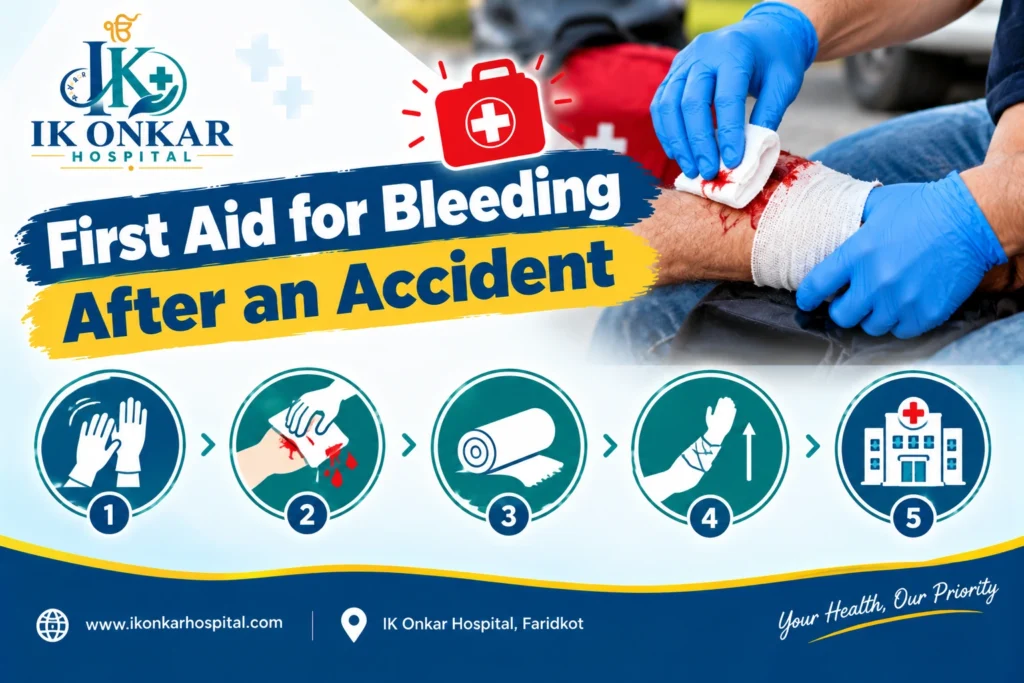
Bleeding after an accident can be a small cut or a life-threatening injury. Knowing first aid for bleeding helps you control blood loss until medical help arrives. First, make sure the scene is safe. Then press firmly on the wound and call for help if needed.
This accident first aid guide shows how to handle common bleeding injuries. It also explains how to spot severe bleeding and when to seek emergency care. Meanwhile, these steps give quick support until a doctor can check the injury.
What Is First Aid for Bleeding?
First aid for bleeding means quick steps to stop blood loss and protect the injured person. Because medical help may take time to arrive, your actions matter. For most outside wounds, the key step is firm, steady pressure on the bleeding spot.
Severe bleeding needs urgent attention. Therefore, don’t waste time looking for supplies or trying home remedies. Call for help first.
What Should You Do First When Someone Is Bleeding?
Follow these accident first aid steps for an external bleeding injury.
1. Make Sure the Scene Is Safe
First, check for traffic, fire, broken glass, or live wires before you go near. Your safety comes first.
Wear disposable gloves if you have them. In severe bleeding, however, don’t delay life-saving help just to find gloves. Instead, try to avoid touching another person’s blood.
2. Call for Emergency Help When Needed
Dial 112 in India if the bleeding is severe, won’t stop quickly, or follows a major accident. The Government of India’s Emergency Response Support System uses 112 as its single emergency number. Source: Government of India
If someone is nearby, ask them to call while you give first aid. Next, tell the operator where the accident happened and what the injury is. Also say whether the person is awake and breathing normally.
3. Apply Firm, Direct Pressure
Place sterile gauze or a clean cloth over the wound. Then press firmly with your hand and keep the pressure steady.
Avoid lifting the dressing again and again to check the wound. This can break the clot that is forming.
If blood soaks through, leave the first dressing in place. Instead, add more cloth on top and keep pressing. In addition, follow the emergency operator’s advice and get urgent care for severe or lasting bleeding.
4. Keep Pressure on the Wound
Keep pressing until the bleeding stops or trained help takes over. Likewise, you can stop if emergency staff give new instructions.
Once bleeding is under control, you can tie a dressing over the wound. However, it should not be so tight that it cuts off blood flow below the injury. If bleeding starts again, press firmly and get medical help.
A tourniquet may be needed for life-threatening bleeding from an arm or leg. Use a commercially made one if you have it and know how to use it. Otherwise, follow the emergency operator’s instructions. Once it is on, don’t loosen or remove it yourself.
How Can You Recognise Severe Bleeding?
Severe bleeding can quickly put a life at risk. For example, it can follow road accidents, falls, machine injuries, or deep cuts.
Watch for these warning signs:
- Blood that spurts from the wound or flows nonstop
- Bleeding that does not stop with firm pressure
- A large or deep wound
- Blood pooling around the injured person
- Pale, cool, or clammy skin
- Dizziness, weakness, confusion, or fainting
- Fast breathing or a weak, rapid pulse
- Less response or sudden collapse
These signs may mean heavy blood loss or shock. Shock is a life-threatening state where organs don’t get enough blood and oxygen.
You don’t need to see every sign. In fact, severe bleeding alone is reason enough to call for emergency help. Internal bleeding can also happen with no visible blood, especially after major trauma.
What Should You Do for Different Types of Bleeding?
Minor Cuts and Scrapes
For a small wound with light bleeding, follow these steps:
- First, wash your hands if you can.
- Then press gently and steadily with clean gauze or cloth.
- Next, rinse the wound with clean running water once the bleeding stops.
- After that, cover it with a clean dressing.
- Finally, watch for spreading redness, more pain, swelling, pus, or fever.
Even a small-looking wound may need a doctor. This applies if it is deep, dirty, or a bite, or has debris in it. Similarly, get it checked if feeling or movement is affected.
Deep Cuts and Puncture Wounds
Deep cuts can damage blood vessels, nerves, or tendons. Puncture wounds can also push germs deeper into the body.
Press on the wound if needed and get a doctor to check it soon. Don’t probe the wound or pour harsh chemicals on it. Afterward, a doctor can decide whether it needs stitches, more cleaning, a check for deeper injury, or a tetanus shot.
An Object Embedded in a Wound
Never pull out an object stuck in a wound. Otherwise, it may increase bleeding or harm the tissue below.
Instead, press around the object, not on it. Use clean dressings to hold it steady without pushing it deeper. Get urgent medical care, especially if the object is large or the wound is deep.
Nosebleeds After an Accident
For a simple nosebleed, sit upright and lean slightly forward. Then pinch the soft part of the nose for 10–15 minutes. Breathe through your mouth during this time.
Don’t tilt the head back, because blood may flow down the throat. After a major accident, however, seek urgent care if there is a possible head or face injury, trouble breathing, or heavy bleeding. A nosebleed after trauma is not always minor.
What Should You Avoid When Treating a Bleeding Wound?
Wrong first aid for bleeding can delay treatment or worsen the injury. Therefore, avoid these mistakes:
- Removing the dressing again and again to check the wound
- Pulling out an embedded object
- Using unclean materials when clean gauze or cloth is available
- Probing deep wounds or digging out debris
- Applying powder, toothpaste, coffee, or other home remedies
- Loosening a tourniquet once it is on
- Giving food or drink to a person who is badly hurt, confused, or may need surgery
- Moving someone needlessly when a neck or back injury is suspected, unless danger is immediate
If the person stops responding and isn’t breathing normally, call emergency services. Meanwhile, follow the operator’s CPR instructions.
When Does Bleeding Require Emergency Medical Care?
Get emergency care when bleeding is heavy, continues despite firm pressure, or follows a major accident. Likewise, deep wounds, suspected internal bleeding, or injuries to the head, neck, chest, or abdomen need urgent checks. The same applies to injuries near a major blood vessel.
Emergency evaluation matters even more if the injured person has:
- A large, deep, or gaping wound
- Loss of feeling or movement near the injury
- A suspected fracture or crush injury
- Signs of shock, such as fainting or cold, clammy skin
- Bleeding while on blood thinners, or a known bleeding disorder
- A wound from a bite, a dirty object, or a puncture
- Bleeding that stops and then starts again
At the hospital, a doctor may check the wound, test blood flow and nerve function, and clean it. They may also close it if needed and review tetanus protection. However, further tests depend on the injury.
What Happens After Bleeding Is Controlled?
Stopping visible bleeding is only the first step. In some cases, injuries need more care even after the blood stops.
Depending on the wound, a doctor may suggest cleaning, stitches, or a dressing. They may also check for damage under the skin.
Ask whether you need a tetanus shot or other preventive care. The answer depends on the wound and your vaccine history.
After treatment, see a doctor if redness spreads or pain gets worse. Besides that, watch for more swelling, pus, fever, or returning bleeding. New numbness, weakness, or trouble moving the area also needs a check.
Emergency Care in Faridkot
Need quick emergency care in Faridkot after an accident? Severe bleeding, suspected internal injury, or signs of shock should never wait for a routine appointment.
Ik Onkar Hospital is at Former Dashmesh Hospital Building, Talwandi Road, Faridkot, Punjab. First, contact the hospital directly to ask about emergency and accident-related services. Then confirm that it can manage the specific injury, because not every service or specialist may be available.
If bleeding is uncontrolled or the person feels faint or confused, call 112 right away. Meanwhile, keep pressing on the wound until help arrives, as long as the scene stays safe.
Bleeding after an accident can range from a minor cut to a life-threatening injury. Knowing the correct first aid for bleeding can help control blood loss while medical help is arranged. The most important steps are to make sure the scene is safe, apply firm direct pressure to the wound, and recognise when emergency assistance is needed.
This guide explains how to manage common bleeding injuries, identify signs of severe blood loss, and understand when to seek emergency care. These steps are intended to provide immediate support until a qualified healthcare professional can assess the injury.
What Is First Aid for Bleeding?
First aid for bleeding means taking immediate steps to control blood loss and protect an injured person until professional medical care is available. For most external wounds, the main first-aid measure is firm, continuous pressure directly over the bleeding site.
Severe bleeding requires urgent attention. Do not delay emergency assistance while searching for supplies or trying multiple home remedies.
What Should You Do First When Someone Is Bleeding?
Follow these steps when helping someone who has an external bleeding injury.
1. Make Sure the Scene Is Safe
Before approaching the injured person, check for traffic, fire, broken glass, electrical hazards, or other dangers. Do not put yourself at risk.
If available, wear disposable gloves. If gloves are unavailable and the bleeding is severe, do not delay life-saving first aid solely to find them. Avoid direct contact with another person’s blood as much as possible.
2. Call for Emergency Help When Needed
Call 112 in India for emergency assistance if the bleeding is severe, cannot be controlled promptly, or follows a major accident. The Government of India’s Emergency Response Support System uses 112 as its integrated emergency number. Source: Government of India
Ask another person to make the call while you provide first aid, if possible. Tell the operator where the accident occurred, the nature of the injury, and whether the injured person is conscious and breathing normally.
3. Apply Firm, Direct Pressure
Place sterile gauze or a clean cloth directly over the wound. Press firmly with your hand and maintain steady pressure.
Do not repeatedly lift the dressing to check whether the bleeding has stopped. Doing so can disturb the clot that is forming.
If blood soaks through the dressing, keep the original dressing in place and continue direct pressure. Follow emergency-dispatch instructions and seek urgent medical care for severe or persistent bleeding.
4. Keep Pressure on the Wound
Continue applying pressure until the bleeding stops, trained help takes over, or emergency professionals give different instructions.
Once bleeding is controlled, a dressing may be secured over the wound. It should not be so tight that it causes concerning changes in circulation beyond the injury. If bleeding starts again, apply direct pressure and obtain medical help.
For life-threatening bleeding from an arm or leg, a commercially made tourniquet may be necessary. Use one if available and you are trained, or follow emergency-dispatch instructions. Once applied, do not loosen or remove it yourself.
How Can You Recognise Severe Bleeding?
Severe bleeding is blood loss that may quickly threaten a person’s life. It can occur after road accidents, falls, machinery injuries, deep cuts, or other trauma.
Warning signs include:
Blood spurting from a wound or flowing continuously.
Bleeding that does not stop with firm, direct pressure.
A large or deep wound.
Rapidly increasing blood loss or blood pooling around the injured person.
Pale, cool, or clammy skin.
Dizziness, weakness, confusion, or fainting.
Rapid breathing or a rapid, weak pulse.
Reduced responsiveness or collapse.
These symptoms may indicate significant blood loss or shock. Shock is a life-threatening condition in which the body’s organs do not receive enough blood flow and oxygen.
Do not wait for every warning sign to appear. Severe bleeding itself is enough to justify urgent emergency assistance. Serious internal bleeding may also occur without visible blood, particularly after major trauma.
What Should You Do for Different Types of Bleeding?
Minor Cuts and Scrapes
For a small wound where bleeding is light and easily controlled:
Wash your hands, if possible.
Apply gentle, steady pressure with clean gauze or a cloth.
Once the bleeding stops, rinse the wound with clean running water.
Cover it with an appropriate clean dressing.
Monitor for redness that spreads, increasing pain, swelling, pus, or fever.
A wound that appears small may still need medical assessment if it is deep, dirty, caused by a bite, contains debris, or has damaged sensation or movement.
Deep Cuts and Puncture Wounds
Deep cuts can damage blood vessels, nerves, tendons, or other tissues. Puncture wounds may also carry contamination deeper into the body.
Apply direct pressure if appropriate, and arrange prompt medical assessment. Do not probe the wound, attempt to explore its depth, or pour harsh chemicals into it.
A clinician can determine whether the wound needs closure, further cleaning, an assessment of deeper injury, or tetanus-related care.
An Object Embedded in a Wound
Do not pull out an object embedded in a wound. Removing it may worsen bleeding or damage underlying tissues.
Instead, apply pressure around the object rather than directly on it. Use clean dressings to support the area without pushing the object deeper. Seek urgent medical care, particularly if the object is large or the wound is deep.
Nosebleeds After an Accident
For an uncomplicated nosebleed, sit upright, lean slightly forward, and pinch the soft part of the nose continuously for 10–15 minutes while breathing through the mouth.
Do not tilt the head backward, because blood may flow into the throat. If the nosebleed follows a major accident, involves a possible head or facial injury, causes breathing difficulties, or is heavy or persistent, seek urgent medical care. Do not assume that a nosebleed after trauma is a minor injury.
What Should You Avoid When Treating a Bleeding Wound?
Incorrect first aid can delay treatment or worsen an injury. Avoid these actions:
Do not repeatedly remove the dressing to inspect the wound.
Do not remove an embedded object.
Do not use unclean materials if clean gauze or cloth is available.
Do not probe deep wounds or attempt to remove deeply embedded debris.
Do not apply powders, toothpaste, coffee, or other home remedies to an open wound.
Do not loosen a tourniquet after it has been applied for life-threatening bleeding.
Do not give food or drink to someone who is severely injured, confused, or may need emergency surgery.
Do not move a person unnecessarily if a serious neck, back, or other major injury is suspected, unless there is immediate danger.
If the person becomes unresponsive and is not breathing normally, call emergency services and follow the dispatcher’s instructions for CPR.
When Does Bleeding Require Emergency Medical Care?
Seek emergency medical care when bleeding is heavy, continues despite firm direct pressure, or follows a major accident. A deep wound, suspected internal bleeding, or injury involving the head, neck, chest, abdomen, or a major blood vessel also requires urgent assessment.
Emergency evaluation is especially important if the injured person has:
A large, deep, or gaping wound.
Loss of sensation or movement near the injury.
A suspected fracture or crush injury.
Signs of shock, such as fainting, confusion, cold clammy skin, or rapid breathing.
Bleeding while taking blood-thinning medication or a known bleeding disorder.
A wound caused by an animal or human bite, a dirty object, or a puncture.
Bleeding that stops and then starts again.
A healthcare professional may examine the wound, assess circulation and nerve function, clean it, close it when appropriate, and review tetanus protection. Further tests or treatment depend on the injury.
What Happens After Bleeding Is Controlled?
Stopping the visible bleeding is only the first step. Some injuries need additional care even after the blood flow has stopped.
Depending on the wound, a clinician may recommend cleaning, stitches or another wound-closure method, a dressing, or further investigation for damage beneath the skin.
Ask a healthcare professional whether tetanus vaccination or other preventive care is needed. The decision depends on the wound and the person’s vaccination history.
After treatment, seek medical advice if redness spreads, pain worsens, swelling increases, pus develops, fever occurs, or bleeding returns. New numbness, weakness, or difficulty moving the affected area also needs assessment.
Emergency Care in Faridkot
After an accident, people in Faridkot may need to decide whether a wound can be assessed routinely or requires emergency attention. Severe bleeding, suspected internal injury, or signs of shock should never be managed at home while waiting for a routine appointment.
Ik Onkar Hospital is located at Former Dashmesh Hospital Building, Talwandi Road, Faridkot (Pb.) 151203.
For information about available emergency and accident-related services, contact the hospital directly and confirm whether it can manage the specific injury. Hospital capabilities and specialist availability should be verified rather than assumed.
If the person has uncontrolled bleeding, becomes faint or confused, or appears seriously injured, call 112 for emergency assistance. Continue direct pressure on the wound while waiting for help, provided the scene remains safe.
Conclusion
Correct first aid for bleeding starts with scene safety, firm direct pressure, and early recognition of severe blood loss. Minor cuts may respond to basic wound care, but deep wounds, uncontrolled bleeding, and injuries after major accidents require prompt medical assessment.
Do not remove embedded objects or delay emergency help when warning signs are present. For people in Faridkot, confirming the appropriate level of emergency care can help avoid delays when an injury needs professional treatment.
This article provides general first-aid information and does not replace emergency services, first-aid training, or an individual medical assessment.