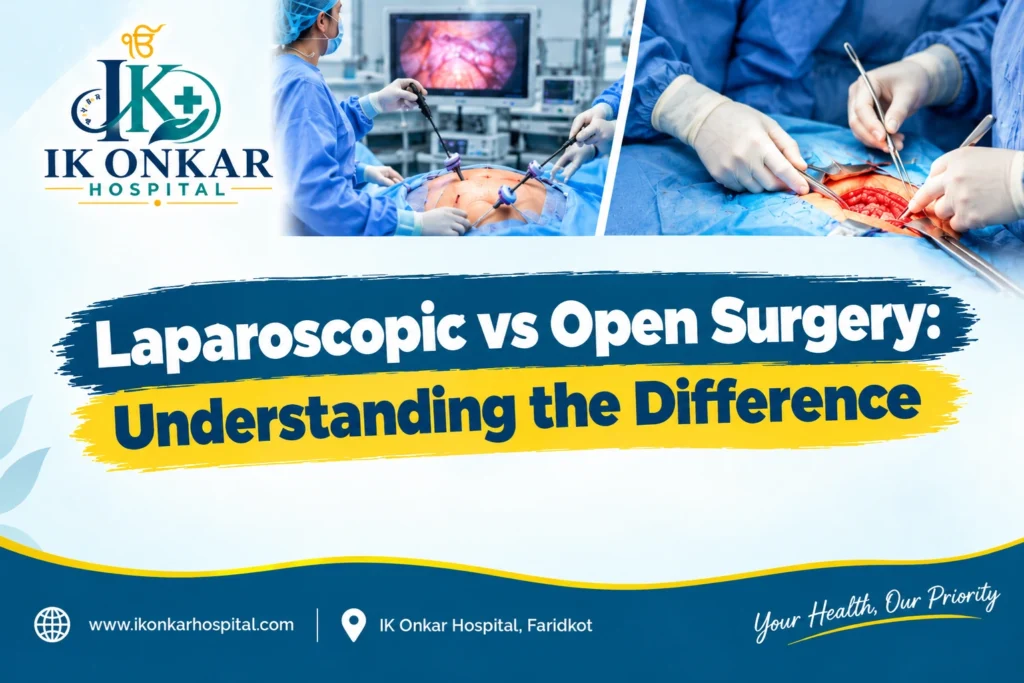
Your doctor may advise surgery. Then you may ask one big question. Can you have laparoscopic surgery, or do you need an open operation? Laparoscopic vs open surgery is mainly about how the surgeon reaches the problem. Laparoscopic surgery uses a camera and tools through small cuts. Open surgery, on the other hand, uses one larger cut.
Both ways can work well. However, the best choice depends on your condition and your health. Your surgeon’s advice also matters. This guide explains laparoscopic vs open surgery in simple words. In addition, it covers benefits, limits, risks, and recovery.
What Is Laparoscopic Surgery?
Laparoscopic surgery is a type of minimally invasive surgery. First, the surgeon makes a few small cuts. Then a thin tube called a laparoscope goes inside. It has a camera and a light. As a result, the team can watch the area on a screen.
Next, the surgeon passes thin tools through the other cuts. In many belly operations, gas fills the belly. This gas gives the surgeon room to see and work.
People also call it keyhole surgery. Doctors use it for the gallbladder, appendix, bowel, and pelvic organs. However, it does not suit every patient. Source: NHS
What Is Open Surgery?
In open surgery, the surgeon makes a larger cut. Therefore, the surgeon can see and reach the area directly.
Open surgery still matters a lot. For example, doctors may choose it for complex operations. Also, it helps when small tools cannot reach the area. Besides, it suits urgent problems that need quick control.
A bigger cut does not mean a worse operation. Instead, the goal is safe and effective treatment. So the surgeon picks the approach that fits you best.
Laparoscopic vs Open Surgery: Key Differences
The main laparoscopic vs open surgery differences are access, scars, pain, and recovery.
First, look at access. Laparoscopic surgery uses small cuts and a camera. Open surgery uses one larger cut for direct access.
Next, think about scars. Small cuts usually leave small scars. Likewise, a larger cut usually leaves a larger scar.
Pain also differs. Laparoscopic surgery may cause less pain. In contrast, open surgery may hurt more because the wound is bigger.
Hospital stay and recovery often differ too. A laparoscopic stay may be shorter. Meanwhile, an open surgery stay may be longer, depending on the operation.
Finally, consider who each option suits. Laparoscopic surgery depends on the condition and the patient. Open surgery often suits complex or urgent cases.
However, these points are general. For example, a complex laparoscopic operation can still need a long recovery. Therefore, compare the same operation when you study laparoscopic vs open surgery. Sources: Mayo Clinic, American College of Gastroenterology
Benefits of Laparoscopic Surgery
Minimally invasive surgery disturbs less tissue. As a result, many patients feel more comfortable during recovery. In laparoscopic vs open surgery comparisons, these benefits often stand out.
Smaller wounds come first. The surgeon works through several small cuts, not one large cut. Also, many patients feel less pain than after a similar open operation.
Movement may return sooner too. With a smooth recovery, you may walk and do daily tasks earlier. In addition, some patients go home the same day. However, complex cases may still need a longer stay.
Finally, small cuts usually leave small scars. Still, healing differs from person to person. Therefore, ask your surgeon what to expect in your own case.
Limits of Laparoscopic Surgery
Laparoscopic surgery does not suit everyone. It needs special tools, a good operating room, and a trained team.
Some operations take longer than open surgery. Also, scar tissue from past surgery can make access harder. Likewise, some medical conditions make laparoscopy unsafe. In addition, unexpected findings may need a bigger cut. Besides, not every hospital has the right tools or experts.
Sometimes the surgeon starts with a camera and then switches to open surgery. Doctors call this conversion. Bleeding, scar tissue, or unclear anatomy can cause it. However, conversion does not always mean something went wrong. Often, it is a safety choice. Therefore, ask before surgery when your surgeon might switch. Source: Mayo Clinic
When Is Open Surgery Necessary?
Open surgery may be better when it gives safer access. The diagnosis, the urgency, and your body all matter. In the laparoscopic vs open surgery decision, a surgeon may advise an open approach in several cases.
For example, the problem may cover a large or complex area. Similarly, heavy bleeding may need quick control. Sometimes the disease is wider than scans showed. Also, scar tissue can block small tools. In addition, some patients cannot safely have a laparoscopic approach. Finally, the hospital may not offer laparoscopic tools or training.
Sometimes both options are reasonable. In other cases, one option is clearly safer. So ask your surgeon why they advise one approach.
Risks in Laparoscopic vs Open Surgery
Both approaches carry risks. The level depends on the operation, your health, and the anaesthesia. Common risks include bleeding, infection, and blood clots. Also, some patients react badly to anaesthesia. Nearby organs or blood vessels can get injured too. In addition, wounds may heal slowly.
Laparoscopic surgery adds a few special risks. For example, the instruments can injure tissue. The gas can also cause problems. On the other hand, open surgery may cause more wound pain and wound problems because the cut is larger.
No surgery is risk-free. Therefore, your surgeon and anaesthesia team should explain the risks that matter most for you.
Recovery: Laparoscopic vs Open Surgery
Recovery depends on the operation, your health, and any complications. For similar procedures, laparoscopic surgery often brings quicker recovery because the cuts are smaller. Still, no single timeline fits everyone.
Recovery After Laparoscopic Surgery
You may feel soreness near the cuts. Tiredness, bloating, and shoulder pain can also happen because of the gas. Your team will explain wound care, rest, pain control, food, and follow-up visits. Some patients go home the same day. Others stay longer.
Recovery After Open Surgery
An open wound is larger, so it may heal more slowly. As a result, you may need more time before lifting, exercise, or hard work. Therefore, follow your discharge advice. Do not compare yourself with another patient.
When Should You Call a Doctor?
Seek advice quickly if you have fever, strong pain, or repeated vomiting. Also call if the wound turns red or leaks fluid. However, get emergency help at once for trouble breathing, chest pain, fainting, or heavy bleeding.
How Surgeons Choose Between Laparoscopic vs Open Surgery
Surgeons look at the needs of the operation. Cut size alone does not decide the plan. First, they study your condition. Some problems suit minimally invasive surgery. Others need open access.
Next, they think about complexity. The location, size, and spread of the problem all matter. Then they review your medical history. Past operations, illnesses, and medicines can change the plan. Likewise, your overall health shows the safest route.
Also, the hospital needs the right tools and a trained team. Finally, your wishes count. If both options are safe, talk through the pros and cons together.
So ask your surgeon to explain the choice. A clear talk helps you understand the benefits, risks, and recovery plan.
Questions to Ask About Laparoscopic vs Open Surgery
Before you agree to surgery, consider these questions:
- Is laparoscopic surgery right for my condition?
- What are the pros and cons of each approach in my case?
- Why do you advise this method?
- Could my surgery switch from laparoscopic to open?
- How long will I stay in hospital?
- When can I return to work, driving, and exercise?
- What should I do if symptoms get worse at home?
Besides, the answers should fit your own operation and health history.
Laparoscopic Surgery in Faridkot
Patients who compare laparoscopic vs open surgery in Faridkot should first confirm their procedure. Then check whether the hospital has the right surgeons, equipment, anaesthesia support, and after-care.
Ik Onkar Hospital is in the Former Dashmesh Hospital Building, Talwandi Road, Faridkot, Punjab. You can call the hospital to ask about surgical services and consultation timings. Also ask whether your procedure is available. If you search for laparoscopic surgery Faridkot, ask about minimally invasive surgery options for your condition.
However, not every hospital offers every procedure. If you need special care, the treating doctor can guide you to the right referral.
Conclusion
The main point in laparoscopic vs open surgery is simple. The surgeon reaches the problem in a different way. Laparoscopic surgery uses small cuts and a camera. Open surgery, in contrast, uses a larger cut for direct access.
For suitable cases, minimally invasive surgery may mean less pain, smaller scars, and quicker recovery. Still, open surgery is the safer choice for some patients. So when you compare laparoscopic vs open surgery, remember that your condition, health, and surgeon’s advice decide the best choice.
If you plan surgery in Faridkot, talk to a qualified surgeon. Also ask about risks, recovery, other options, and facilities.
This article gives general health information. It does not replace a consultation with a qualified healthcare professional.