
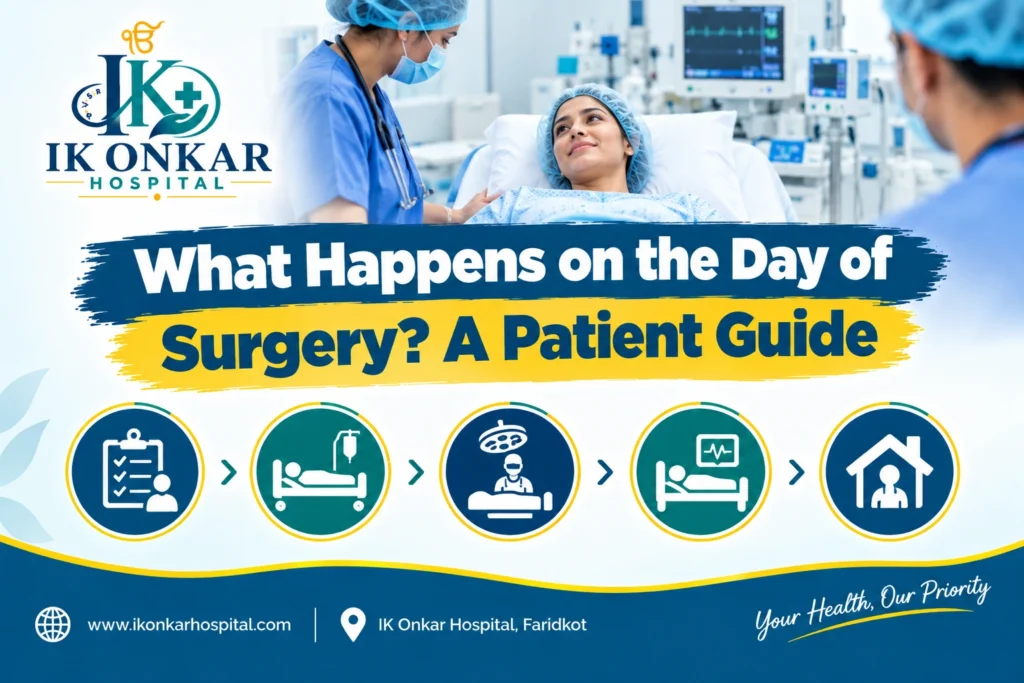
Surgery can feel stressful. Many people worry about what will happen at the hospital. However, knowing the day of surgery steps can help you feel calm. As a result, you can speak to your care team with confidence.
Every surgical procedure is a little different. Still, most planned operations follow the same stages. First, you are admitted. Next, the team does checks and takes your consent. After that, you get anaesthesia and the operation begins. Finally, staff watch over you while you recover. Your hospital team will explain each step that applies to you.
What Should You Expect on the Day of Surgery?
The day of surgery starts with admission. First, staff review your medical details. They check your identity and confirm the planned surgical procedure. Then they go over your medicines and allergies.
After that, you may meet your surgeon and anaesthesia team. Next, you go to the operating theatre. Once the operation ends, staff move you to a recovery area. Timing is different for every patient, so ask your team about your own plan.
What Should You Do Before Leaving Home?
Good hospital surgery preparation begins at home. Therefore, follow your hospital’s instructions closely.
Follow Fasting Instructions
Your team may ask you to stop eating and drinking for some hours. This time depends on the surgical procedure, the anaesthesia, and your health.
Do not guess if water or a snack is fine. Instead, follow the exact advice you were given. If you eat or drink by mistake, tell the staff on arrival. Hiding it can affect your safety. It can also change the timing of the operation.
Review Your Medicines
Tell your doctor about every medicine you take. This includes prescription drugs, vitamins, and herbal products. Some medicines need changes before surgery. Others can continue as usual.
Never stop a medicine on your own. This matters most for blood thinners and diabetes medicines. So, ask your team for clear advice.
Pack Your Documents and Personal Items
Depending on the hospital, you may need to bring:
- Appointment or admission details
- Photo ID and medical records
- Previous test reports, scans, and prescriptions
- A list of your medicines and allergies
- Insurance or payment papers
- Glasses, hearing aids, or walking aids
Wear comfortable clothes and leave valuables at home. Also, ask if you must remove jewellery, nail polish, or makeup.
If you are having day surgery, arrange for an adult to take you home. After general anaesthesia, driving is not safe.
What Happens When You Arrive at the Hospital?
On arrival, the admission team checks your details. Then they send you to the right ward.
A nurse may ask for your name, date of birth, and allergies. She may also ask which surgical procedure you are having. In addition, staff may check your blood pressure and pulse.
Next, you may change into a hospital gown. Sometimes the team places an IV line for fluids or medicines.
Different staff may ask the same questions. This is normal. In fact, repeated checks make sure the right patient gets the right care. If any detail has changed, tell the team right away.
What Checks Are Done Before Surgery?
Pre-operative checks help the team confirm the surgical procedure. They also help spot risks early. These checks may include:
- Medical history: Existing conditions, past operations, and family history
- Medicine and allergy review: Current medicines and past reactions to anaesthesia
- Vital signs: Blood pressure, heart rate, temperature, and oxygen levels
- Test review: Blood tests, scans, or heart tests
- Procedure confirmation: The correct operation and body site
Not every patient needs the same tests. Instead, your surgeon and anaesthesia team decide what suits you.
Before hospital surgery, the doctor should explain the procedure, its benefits, its risks, and other options. Moreover, you should get time to ask questions. Only then do you give informed consent. If anything is unclear, speak up before the operation begins.
What Happens Before Anaesthesia?
Anaesthesia prevents pain, so the surgical procedure can go ahead. The type depends on the operation and your health. Common types include:
- Local anaesthesia: Numbs a small area
- Regional anaesthesia: Blocks feeling in a larger part of the body
- General anaesthesia: Keeps you unconscious during surgery
- Sedation: Makes you relaxed or sleepy
The anaesthesia doctor reviews your history, allergies, medicines, and fasting status. Also, mention any past problems with anaesthesia. After that, the doctor explains the plan and answers your questions.
Depending on the operation, you may get medicine through an IV line, an injection, or a mask. Throughout the process, the team monitors you closely.
What Happens During a Surgical Procedure?
Once the checks are done, the team prepares you for the operation. Staff confirm your identity and the planned surgical procedure again. In addition, they complete a few more safety checks.
The team also follows steps to prevent infection. The surgeon may make one cut. In some cases, small openings and special tools are used instead. The method depends on the operation.
Surgery time varies a lot. A simple procedure may be short. In contrast, a complex operation can take hours. Your surgeon can give an estimate, but the real time may differ.
Under general anaesthesia, the anaesthesia team monitors you throughout. With local anaesthesia, you may stay awake. Meanwhile, your family usually waits in a waiting area. Ask the hospital how they will get updates.
What Happens Immediately After Surgery?
After surgery, you move to a recovery area. Nurses check your breathing, heart rate, and blood pressure. They also see how well you are waking up.
Staff may also watch for:
- Pain, nausea, or vomiting
- Changes in your wound, dressing, or drain
- Fluid intake and urine output, when needed
Some pain, sleepiness, or nausea is common. However, tell the staff at once if you have severe pain, breathing trouble, or dizziness. The team will give you pain relief. Later, you can drink, eat, and walk when it is safe.
When Can You Go Home After Surgery?
Some patients go home the same day. Others stay overnight. It depends on the operation and your recovery.
Before discharge, the team checks that you are stable. Then they explain how to care for yourself. You may get advice on:
- Medicines and pain relief
- Wound care and bathing
- Food, drink, and activity
- Follow-up visits and test results
- Returning to work
- Warning signs that need urgent care
After general anaesthesia, an adult may need to stay with you. Do not drive or make big decisions until your doctor says it is safe. Above all, follow your discharge sheet, not a general timeline.
When Should You Seek Medical Help After Surgery?
Call your surgical team quickly if your recovery worries you. Likewise, do not wait if symptoms get worse. Seek urgent help for:
- Trouble breathing or chest pain
- Heavy or constant bleeding
- Fainting, severe confusion, or trouble waking
- Severe pain that gets worse fast
- A wound that is red, swollen, painful, or leaking pus
- Fever or chills with worsening symptoms
Check your discharge papers for warning signs linked to your procedure. If symptoms seem life-threatening, go for emergency care immediately.
Preparing for Hospital Surgery in Faridkot
If you plan hospital surgery in Faridkot, confirm the admission details early. First, ask where to report and what time to arrive. Also, ask which documents to bring. Finally, find out whom to call if you feel unwell before the day of surgery.
Ik Onkar Hospital is at Former Dashmesh Hospital Building, Talwandi Road, Faridkot, Punjab. If you want a surgery hospital Faridkot patients can approach, contact the hospital directly. Ask if your surgical procedure is available there. In addition, ask which doctor will assess you. Then check what tests you need and whether you must stay overnight.
Before admission, understand your fasting and medicine instructions. Also, tell the team about your health conditions and allergies. If you get a fever, cough, or vomiting before surgery, call the hospital. Do not decide on your own whether to go ahead.
Conclusion
Knowing what happens on the day of surgery helps you feel ready. It makes admission, checks, anaesthesia, and recovery less stressful. Above all, follow your surgical team’s advice on fasting and medicines.
Before you leave, make sure you understand your discharge plan, wound care, and follow-up visits. Also, if you are choosing a surgery hospital Faridkot offers, confirm your surgical procedure and the hospital’s arrangements first. With good planning, hospital surgery becomes much easier to handle.
This article gives general information only. It does not replace advice from your surgeon, anaesthesia doctor, or treating clinician.