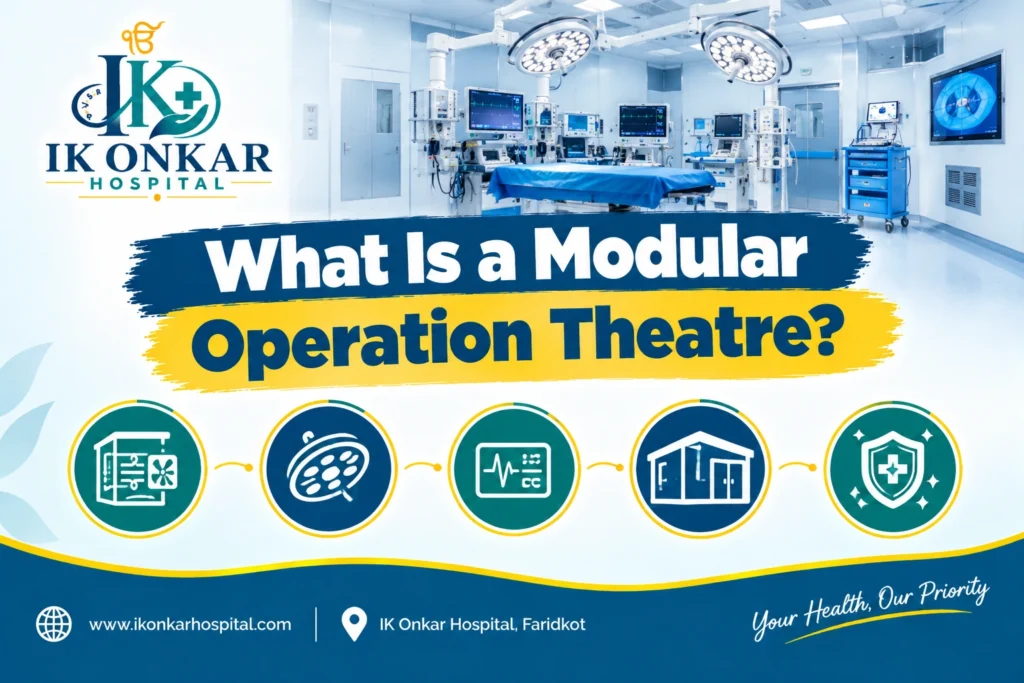
A modular operation theatre is a surgery room made with ready-made wall and ceiling panels. Besides panels, it has planned air flow, lights, power, and gas lines. As a result, doctors get a clean and controlled space to work in.
When patients compare hospitals, they hear many terms. For example, modular OT, sterile operation theatre, and advanced surgical facilities come up often. Knowing what they mean helps you ask better questions about safety.
This guide explains what a modular operation theatre is. Moreover, you will learn its main parts and how it helps prevent infection. Finally, you will see what to check in a hospital OT Faridkot offers.
What Is a Modular OT in Simple Words?
A modular OT uses panels that are made in advance and fitted on site. In addition, the room has planned electrical, air, light, and gas systems. The exact design depends on the hospital and the type of surgery.
In an old-style room, fittings often get added one by one after the room is built. In a modular operation theatre, however, the hospital plans all key systems together. Because of this, cleaning and repair become easier.
Still, design alone does not make surgery safe. Trained staff must clean and run the room well. Likewise, clear safety rules matter just as much.
How Is a Modular OT Different?
The main difference is how the systems are planned together. For instance, a modular OT often has smooth walls, neat service panels, special lights, and controlled air flow. These features keep the room tidy and ready for surgery.
A regular operating room can also be safe. So, do not assume a modular OT is always better. Instead, check the real facts, such as the cleaning routine, the equipment, and the skill of the team.
Main Parts of a Modular Operation Theatre
The parts depend on the surgeries a hospital does. Here are the key ones.
1. Walls and Ceiling
Many modular OTs use smooth panels. Because smooth surfaces are easy to wipe, cleaning becomes simple. However, joints and corners need care too. After all, a smooth wall alone does not prove the room is safe.
2. Air Flow and Filters
Air flow matters a lot in a sterile operation theatre. It moves air in a set direction and removes dust and germs. Besides that, it keeps the room at the right temperature.
Many rooms use filtered air and positive pressure. Positive pressure pushes air outward, so air from nearby areas stays out. Some designs also use HEPA filters. However, the choice depends on the standards and the surgery. Therefore, technicians must test and service the system often.
The US CDC and India’s national infection-control guidance both cover OT air flow.
3. Lights and Operating Tables
Surgical lights help the team see clearly. Similarly, operating tables let staff place the patient in the right position. Each surgery needs different features. For this reason, hospitals must service this equipment on time.
4. Gas and Power Systems
A modular OT may have gas outlets, power points, and backup supply. These run the surgery and anaesthesia machines. Because a failure can stop a procedure, regular checks are vital. Therefore, always ask the hospital which services the room really has.
5. Storage and Monitors
A good layout leaves space for tools, supplies, and monitors. As a result, neat storage helps the team work fast. Needs also differ by surgery. So, ask if the hospital has the right devices for your operation.
How Does a Modular OT Help Prevent Infection?
A modular operation theatre can help in several ways. For example, smooth surfaces, clean air, and a neat layout all play a part. Still, no single feature removes the risk of infection.
Infection control works best when many steps come together:
- Cleaning: First, staff clean and disinfect the room and tools by set rules.
- Sterilising tools: Next, the team sterilises reusable instruments before each use.
- Hand wash: In addition, surgeons and nurses follow strict hand-wash steps.
- Sterile supplies: Likewise, gowns, drapes, and tools must be sterile.
- Air checks: Meanwhile, technicians check filters and air pressure often.
- Limited entry: Finally, staff keep door movement low.
The World Health Organization says infection prevention starts before surgery and goes on after it. Therefore, room design is just one part. In fact, a true sterile operation theatre depends on people and routines as much as on building work.
Benefits of a Modular Operation Theatre
The benefits depend on design, upkeep, and daily routines.
- Planned design: For instance, walls, power, lights, and tools are planned together.
- Easy cleaning: Also, smooth surfaces make cleaning and repair simple.
- Smooth workflow: Moreover, a neat layout helps staff reach supplies fast.
- Controlled air: Besides, a well-kept system supports good air quality.
- Flexibility: In some cases, designs make future upgrades easier.
These are possible gains, not promises. However, results depend on how the hospital runs the room.
Does a Modular OT Guarantee Safe Surgery?
No, it does not. A modular OT cannot promise a surgery without risk. Your health, the type of surgery, and the surgeon’s choices also matter. In addition, infection control and aftercare play a big role.
Even a well-built room needs daily cleaning and equipment checks. Besides, trained staff must run it. Also, risks differ from one patient to another.
So, look at the full care journey. First, ask who will do the surgery. Next, ask what anaesthesia and monitoring are planned. Then ask about risks and how the team handles problems.
How Is a Modular Operation Theatre Maintained?
A modular OT needs steady care. Therefore, hospitals should follow written steps for cleaning, checks, and servicing. Maintenance usually includes these tasks:
- Cleaning and disinfecting the room between surgeries.
- Sterilising reusable instruments after every use.
- Inspecting lights, tables, monitors, and gas systems.
- Servicing air equipment and filters on schedule.
- Keeping records of checks, repairs, and servicing.
- Limiting traffic to follow infection-control rules.
The schedule depends on the equipment and the rules that apply. Also, panels alone do not prove the room works as intended.
What Should Patients Ask About OT Facilities?
You do not need to know every technical detail. Even so, a few simple questions help a lot. You can ask:
- Can the hospital perform the surgery I need?
- Which surgeon and anaesthesia doctor will treat me?
- What tests do I need before surgery?
- How does the team clean the OT and sterilise tools?
- Besides that, what monitoring and recovery support will I get?
- If a problem occurs, what happens next?
- Finally, what will the surgery cost, and what does the price include?
The answers should match your condition. If your surgery is urgent, however, do not delay care to read about OT terms online.
Hospital OT Faridkot: What to Check Before You Choose
You can compare a hospital OT Faridkot offers by looking at both the room and the services your surgery needs. Moreover, a good hospital OT Faridkot patients trust explains its facilities clearly. It also answers your questions openly.
Ik Onkar Hospital is at the Former Dashmesh Hospital Building, Talwandi Road, Faridkot, Punjab. Its service details mention modular operation theatres. Therefore, please call the hospital to confirm the current OT facilities and the surgeries it performs. You can also ask about the surgical team, anaesthesia, monitoring, and recovery support.
Before admission, ask the hospital to explain the plan, the preparation, the risks, and the aftercare. If you need a specialist or equipment the hospital lacks, however, the team can suggest a referral.
In short, do not rely on the phrase modular OT alone. Instead, check whether the hospital can support your surgery. Likewise, check its safety steps. Finally, see whether the team can handle your needs.
Frequently Asked Questions
What is the main purpose of a modular operation theatre?
It gives surgeons a planned space with built-in systems, tool layouts, and air control. With proper setup and upkeep, this design also supports cleaning, workflow, and a controlled environment.
Is a modular OT the same as a sterile operation theatre?
Not exactly. A modular OT describes how builders make the room. A sterile operation theatre, however, depends on cleaning, sterile tools, and staff habits. Therefore, the two ideas are linked, but they are not the same.
Does every modular operation theatre have HEPA filters?
No. Filter choices differ between hospitals. So, ask about the filter system, upkeep, and any testing.
Conclusion
A modular operation theatre combines planned building work with technical systems to support surgery. Together, walls, air flow, lights, power, and layout create an organised space.
However, a modular OT cannot promise infection-free surgery on its own. Instead, good upkeep, sterilisation, cleaning, and trained staff matter for a sterile operation theatre.
If you plan surgery, ask whether the hospital’s facilities suit your case. Also, check what a hospital OT Faridkot offers before you decide. As a result, clear answers help you choose with confidence.
This article is for general educational purposes only. It does not replace personalised medical advice from a qualified healthcare professional.