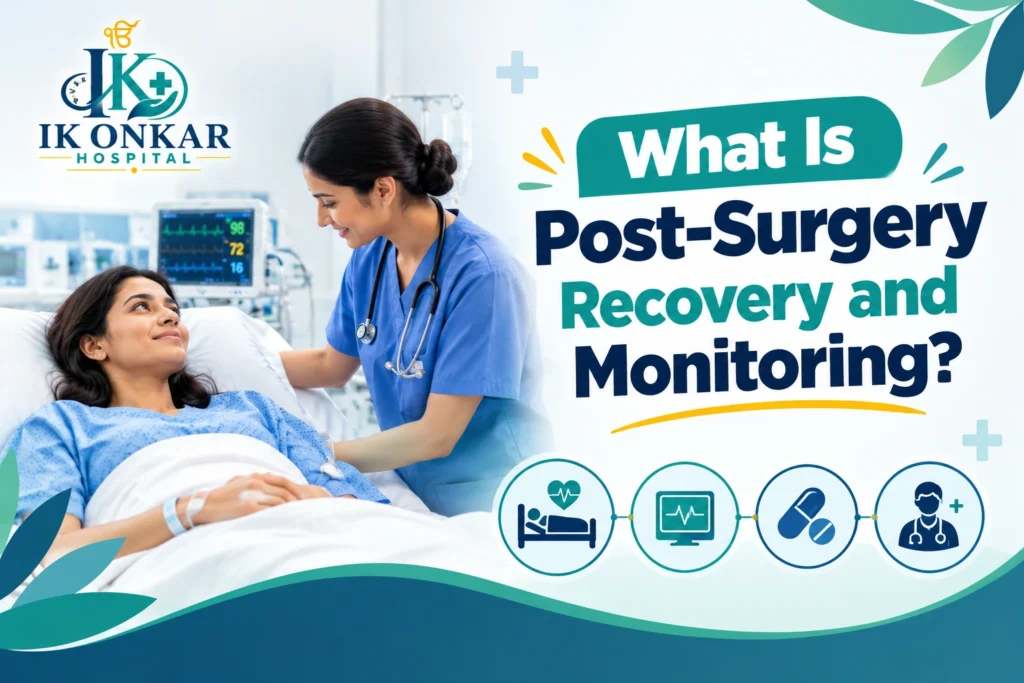
Post surgery recovery is the time when your body heals after an operation. During this time, you slowly return to your daily routine. Doctors and nurses check your vital signs, pain, wound and overall health. As a result, they can find problems early.
However, every patient heals differently. Recovery depends on the type of surgery, your age and your general health. So knowing what to expect makes post surgery recovery easier. It also helps you follow discharge advice and spot warning signs.
What Is Post Surgery Recovery?
Post surgery recovery starts the moment your operation ends. First, the effects of anaesthesia wear off. Then the team watches you and treats any pain. After that, your body heals over days or weeks.
Some patients go home after a short stay. Others, however, need more days in hospital, extra monitoring or rehabilitation.
Postoperative care is the care you get during this time. Its goal is to control pain, support healing and watch your health. Moreover, it helps the team catch problems early.
The plan also depends on your surgery. For example, care after a small procedure is very different from care after major surgery. Abdominal and bone surgeries, in particular, need more time and more rules.
What Happens Right After Surgery?
After the operation, you are moved to a recovery area. Meanwhile, the team stays close to you as the anaesthesia wears off. They also check that your condition is stable.
Early postoperative care usually includes:
- Checking your breathing, heart rate, blood pressure, oxygen level and temperature.
- Seeing how alert you are as you wake up.
- Checking for pain, nausea and vomiting.
- Looking at the dressing for bleeding or leaking fluid.
- Giving pain relief, fluids or oxygen if you need them.
- Deciding when you can drink, eat, move or go to the ward.
How long you stay under watch depends on your surgery and your health. Therefore, if the team sees a problem, you may need more tests or treatment before going home.
What Do Doctors Check During Recovery After Surgery?
Recovery after surgery is not only about the wound. In fact, the team checks many things. Then they compare each result with what is normal for your type of surgery.
Vital Signs and Breathing
Vital signs show how your body is coping after surgery. The team may check:
- Blood pressure: shows how well blood flows.
- Heart rate: shows how your heart is responding.
- Breathing rate: shows how often you breathe.
- Oxygen level: shows how much oxygen is in your blood.
- Temperature: shows if you may have a fever or infection.
Besides this, they watch your skin colour and how easily you breathe. How often they check depends on your needs.
Pain, Nausea and Alertness
Pain and nausea are common after surgery. Also, anaesthesia can make you sleepy for a while. So tell the team if your pain becomes severe or keeps rising. Tell them if your medicine does not help.
Nurses often ask you to rate your pain on a scale. Similarly, they watch for heavy drowsiness, confusion and constant vomiting.
Wound and Bleeding
The team checks your cut for bleeding, swelling, redness and leaking fluid. In addition, they change the dressing as your surgeon advises.
Some soreness near the cut is normal. But rising pain, spreading redness, pus, a bad smell or an opening wound can mean trouble. Therefore, report these signs quickly. MedlinePlus has useful wound-care guidance on this.
Fluids, Urine and Movement
The team may track what you drink and how much urine you pass. This shows if your body has enough water. Likewise, they may check if you can eat safely.
Movement matters too. When it is safe, you may be helped to sit, stand and walk. This helps your body work well again. It also lowers the risks of lying in bed for too long. Still, always follow your team’s advice on how much to move.
What Does Good Postoperative Care Include?
Good postoperative care joins medical checks with clear home instructions. However, the exact plan depends on your surgery and your health.
Medicines and Pain Control
You may get medicines for pain, nausea or other needs. Take them exactly as your doctor says.
Never start, stop or change a medicine on your own. Instead, ask your doctor first. This is very important for blood thinners and diabetes medicines. Besides that, tell your team about your allergies, health problems and all supplements you take.
Wound Care and Cleanliness
Keep your wound and dressing clean. First, follow your discharge instructions. Then ask when you can change the dressing and when you can bathe.
Some simple rules help:
- Wash your hands before and after you touch the wound.
- Do not pull at stitches, staples or skin glue.
- Do not use creams, powders or home remedies unless your doctor says so.
- Follow the advice on showering and keeping the wound dry.
- Go to your check-ups and stitch removal visits.
Wound care differs for each surgery. For that reason, follow the advice for your own operation. The American College of Surgeons also shares wound-care tips.
Food, Water and Rest
Healthy food, enough fluids and good rest help post surgery recovery. Also, follow any diet rules, especially after stomach or bowel surgery.
Your appetite may take time to return. Still, call your doctor if you cannot keep fluids down. Call them too if you keep vomiting or cannot eat as advised.
Safe Movement and Rehab
How much you should move depends on your surgery. For instance, some patients walk soon after the operation. Others, on the other hand, must avoid certain movements or follow a rehab plan.
Follow the rules on lifting, driving, exercise, work and stairs. Do not push through severe pain. Likewise, do not start hard activity before your doctor says it is safe.
How Long Does Recovery After Surgery Take?
No single timeline fits every operation. For example, some people return to light routine in a few days. After major surgery, however, recovery after surgery can take weeks or even months.
Many things affect the time it takes:
- The type and size of the surgery.
- Your age and general health.
- Other illnesses, such as diabetes or heart and lung disease.
- Infection or other complications.
- Your food, movement and how well you follow the plan.
Your surgeon can tell you what to expect. They can also tell you what to avoid and when to come back. So call the team if your post surgery recovery feels different from what they told you.
What Symptoms Are Common During Recovery?
You may feel some pain, tiredness, mild swelling or short-term nausea. What is normal depends on your surgery and anaesthesia.
The pattern and strength of a symptom matter most. Therefore, do not ignore a symptom that keeps getting worse. Likewise, do not ignore one that appears suddenly or does not match your discharge advice.
Keep a note of changes in pain, your wound, temperature, appetite and energy. Finally, if you are not sure a symptom is normal, call your doctor.
When Should You Call a Doctor After Surgery?
Call your surgeon or doctor quickly if you notice:
- More redness, warmth, swelling or pain around the wound.
- Pus, a bad smell or unusual fluid from the cut.
- Fever or chills.
- A wound that opens, or stitches that come loose.
- Constant vomiting or trouble keeping fluids down.
- Pain that gets worse or does not ease with medicine.
- New swelling or pain in one leg.
These signs do not always mean a serious problem. Even so, a doctor must check them. So do not wait for your next appointment if a new worrying symptom appears.
When Is Post Surgery Recovery an Emergency?
Get emergency help right away if you have:
- Severe trouble breathing.
- Chest pain.
- A faint or collapse.
- Heavy bleeding that does not stop.
- Sudden confusion or poor response.
Your surgery and health history may add other danger signs. Therefore, if you suddenly become very unwell, call emergency services or go to the nearest emergency department. Do not drive yourself.
Blood clots can also form after some operations. For example, sudden breathlessness or chest pain may mean a clot in the lung. This needs emergency care. Similarly, new pain or swelling in one leg needs urgent care. The NHS gives more advice on blood clots after surgery.
Besides this, if your doctor gave you special warning signs for your surgery, follow those too.
Hospital Recovery in Faridkot: What to Know
Many families look for hospital recovery Faridkot services before a procedure. In that case, it helps to know what care is available before and after surgery. The right care depends on your surgery, your health and the monitoring you need.
Ik Onkar Hospital is at Former Dashmesh Hospital Building, Talwandi Road, Faridkot, Punjab.
First, call the hospital team. Then ask which surgery, postoperative care, nursing and follow-up services are available now. Also ask if they can manage your type of recovery. If not, ask which hospital is a better choice.
Before you leave any hospital, make sure you know:
- Which medicines to take and how to take them.
- How to care for your cut and dressing.
- Which activities to avoid, and when you can move more.
- Which symptoms need a call, an urgent visit or emergency care.
- The date of your next check-up.
- Whom to call if a problem starts after hours.
Clear discharge advice makes the move from hospital to home much safer. As a result, postoperative care at home becomes easier for you and your family.
Conclusion
Post surgery recovery means healing, managing symptoms and watching for problems. During this time, the team checks your vital signs, breathing, pain, wound, fluids and movement. They also tailor these checks to your needs.
Everyone heals at a different speed. So follow your own discharge advice and attend every follow-up visit. In addition, report worsening symptoms early, and get emergency help for severe warning signs.
Finally, if you want hospital recovery Faridkot support, confirm the services in advance. Check that the hospital suits your planned surgery. This is a key step toward safe recovery after surgery.
This article shares general health information. It does not replace personal medical advice. Always follow your surgeon’s or doctor’s instructions.