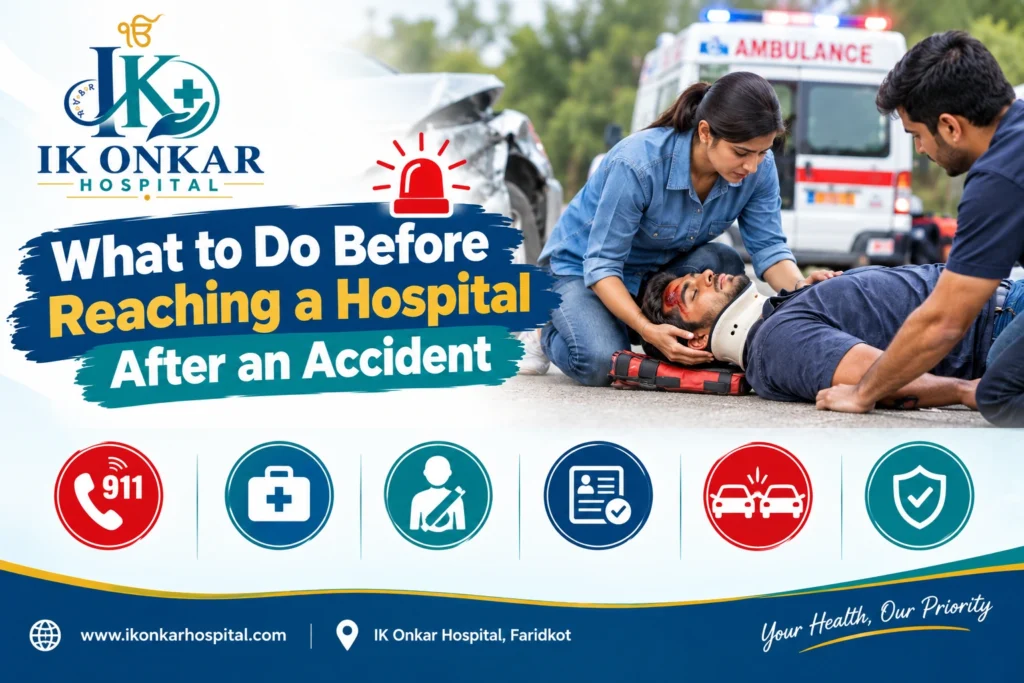
An accident can cause injuries that are hard to see. For this reason, the first few minutes matter a lot. This is especially true when there is heavy bleeding, trouble breathing, or loss of consciousness. A head, neck, or spine injury also needs quick action.
Basic first aid after accident can help you act safely while you arrange medical help. However, your goal is not to diagnose the injury. Instead, keep the person safe and get accident emergency care without delay.
What Should You Do Immediately After an Accident?
First, check if the area is safe for you and the injured person. Then see if the person responds and breathes normally.
If the situation looks serious, call for emergency help at once. Do not delay hospital care by trying treatment beyond your training. In fact, accident emergency care works best when it starts early.
1. Make the Scene Safe
Before you go near the injured person, look for danger. Common risks include moving traffic, fire, fuel leaks, and electrical hazards. Unstable vehicles are also unsafe.
If it is safe, move yourself and others away from danger. At a road accident, warn other drivers about the crash. Above all, never put yourself at risk during a rescue.
2. Check Responsiveness and Breathing
Speak to the injured person and see if they respond. Also, watch whether they breathe normally.
Someone who does not respond or is not breathing normally needs help right away. So, call for emergency help and arrange accident emergency care at once. If you are trained in CPR, start it.
When the person is awake, keep talking to them. Meanwhile, watch for any change while help is on the way.
3. Control Severe Bleeding
Severe bleeding is an emergency. If you can do so safely, press firmly on the wound with a clean cloth or dressing. Then keep pressing and call for emergency help.
Do not waste time cleaning a major wound. Stopping the bleeding must come first.
4. Avoid Unnecessary Movement
After a major accident, a head, neck, or spine injury is possible. Therefore, do not ask the person to walk or move around. Keep them in the position you found them, if possible. Move them only if they are in immediate danger or need life-saving care.
Warning signs include neck or back pain, numbness, and weakness. Loss of movement, confusion, and changes in alertness are also warning signs.
5. Monitor the Person
An injured person’s condition can change while they wait for help. So, keep watching their breathing and responses. Next, tell the medical team about any change. Besides this, protect the person from extreme cold or heat.
First Aid After Accident: What Should You Do?
First aid after accident should focus on immediate threats. It should not try to diagnose the injury. These are the key priorities:
- Make the accident scene safe.
- Call for emergency help.
- Check responsiveness and breathing.
- Control serious bleeding.
- Avoid moving someone with a possible spinal injury.
- Monitor the person’s condition.
- Give only the first aid you are trained to do.
- Share accurate details with healthcare staff.
The goal of first aid is to support the person until professional help arrives. After that, trained doctors should do the trauma assessment and final treatment.
What Should You Not Do After an Accident?
Some well-meant actions can cause more harm. For example, please avoid the following:
- Moving the injured person without need.
- Asking a person with a possible spinal injury to stand or walk.
- Removing a helmet when a head or neck injury is suspected.
- Giving food or drink to a seriously injured or unconscious person.
- Trying to straighten a suspected fracture or dislocation.
- Pulling out objects stuck in a wound.
- Delaying accident emergency care to try long first aid.
- Giving medicines without medical advice.
Be extra careful with a possible head, neck, or spinal injury. Movement can make these injuries worse. Besides, some serious injuries are not obvious at first, so doctors need to check the person.
What Are the Warning Signs of a Serious Accident Injury?
Some injuries need urgent care even when the wound looks small. Therefore, get accident emergency care if the person has any of these signs:
- Loss of consciousness or trouble staying awake
- Confusion or strange behaviour
- Seizures
- Trouble breathing
- Heavy bleeding that does not stop
- New weakness or numbness
- Inability to move a body part
- Severe head, neck, or back pain
- Trouble with walking, balance, speech, or vision
- Repeated vomiting after a head injury
- Blood or clear fluid from the nose or ears after a head injury
- Signs of shock, such as weakness, pale or clammy skin, or confusion
Head injuries may cause symptoms that appear later. For this reason, anyone in a high-impact road accident should get a medical check if a serious injury is possible.
When Is Accident Emergency Care Needed?
Accident emergency care is needed when an injury may affect breathing, blood flow, or brain function. It is especially important after a high-impact crash, a major fall, or any serious trauma.
At the hospital, the team first checks the airway, breathing, and circulation. Next, they check the person’s nervous system and look for visible or hidden injuries. After that, further tests may follow, depending on the injury.
Treatment depends on the type and severity of the injury. For example, trauma care may include wound care, fracture treatment, monitoring, and imaging. Surgical review may also be needed. In short, quick accident emergency care helps doctors find and treat serious injuries early.
What Information Should You Give the Hospital Team?
Clear details help the hospital team understand what happened. So, if you know them, share the following:
- What type of accident it was
- About when it happened
- If the person lost consciousness
- If there was a head impact
- Whether a helmet or seat belt was used
- Where the person feels pain
- Any bleeding
- Vomiting or confusion
- Weakness, numbness, or trouble breathing
- Known medical conditions, allergies, or regular medicines
If possible, carry medical papers or ID. However, do not delay treatment while you look for documents.
Trauma Care in Faridkot
People in Faridkot and nearby areas should know where to go after an accident. In an emergency, knowing where to get accident emergency care can save valuable time.
Ik Onkar Hospital is a trauma hospital Faridkot residents can reach at the Former Dashmesh Hospital Building, Talwandi Road, Faridkot, Punjab. Additionally, you can contact the hospital directly to understand the right emergency and trauma care route for your situation.
However, if an accident looks life-threatening, do not wait. Call emergency services first. The best choice depends on the patient’s condition, how urgent the injury is, and which services are available at that time.
Conclusion
The key steps after an accident are simple. First, stay safe and spot immediate danger. Then get medical help fast. Control serious bleeding if you can. Finally, avoid moving a person with a possible head, neck, or spine injury.
First aid is not a replacement for a medical check. Because some injuries do not show right away, serious symptoms deserve attention. Therefore, take major accidents seriously. Timely accident emergency care helps doctors assess injuries and choose the right treatment.