A broken bone can cause strong pain, swelling, bruising, or trouble moving the limb. However, some fractures cause fewer signs. Therefore, knowing the fracture emergency signs helps you act fast and avoid more harm.
A fracture needs urgent care if the bone breaks the skin. Likewise, a numb or pale limb needs quick help. Heavy bleeding is also a warning sign, and so are injuries to the head, neck, back, hip, or pelvis. After a major injury, faintness, confusion, or trouble breathing can appear.
If a major injury happens, call for emergency help right away. Waiting for the pain to settle can be risky. In this guide, you will learn the main fracture emergency signs, common broken bone symptoms, first aid, diagnosis, and fracture treatment.
What Is a Fracture?
A fracture is a break or crack in a bone. It can happen after a fall, a road accident, a sports injury, or a hard blow. In addition, repeated stress can crack a bone. Weak bones, such as those in osteoporosis, may break even after a small injury.
Fractures differ in type and severity. For example, the skin stays intact in a closed fracture. In an open fracture, a wound reaches the broken bone. A displaced fracture, on the other hand, means the bone pieces have moved out of place.
Some fractures do not look broken at all. In fact, some people can still move the limb. For this reason, never ignore pain, swelling, or weak movement after an injury, even if the limb looks normal.
Fracture Emergency Signs You Should Never Ignore
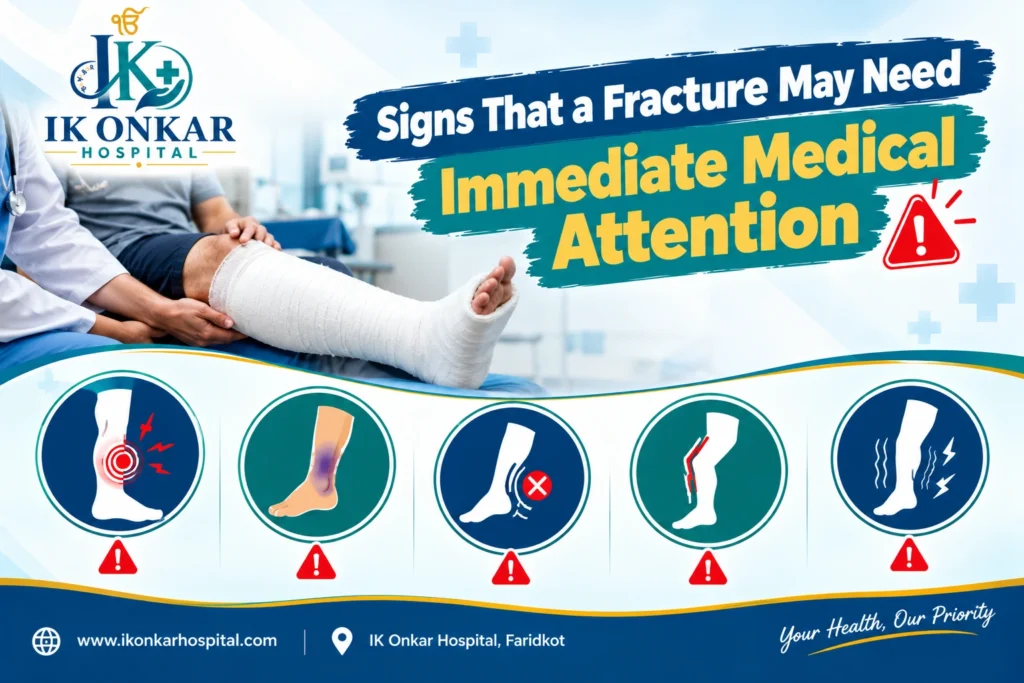
Some signs show that a fracture may harm the bone, blood vessels, nerves, or nearby tissue. Because of this risk, these fracture emergency signs need urgent medical care.
1. Bone Through the Skin or an Open Wound
In an open fracture, a wound sits over or near the broken bone. Sometimes you can see the bone, but not always. Because germs enter an open wound easily, infection is a real risk. Doctors must therefore treat this injury as an emergency.
What to do: First, cover the wound with a clean dressing. Next, keep the limb still. Never push the bone back in, touch the wound, or try to straighten the limb.
2. Severe Pain or Visible Deformity
Severe pain after a fall or crash can point to a serious fracture. Similarly, a limb that looks bent, twisted, or shorter than usual is a warning sign.
Testing the injury by moving the limb again and again can cause more damage. Instead, support the area and get urgent care. Also, do not ask the person to walk.
3. Numbness, Tingling, or Skin Colour Changes
Numbness or tingling below the injury can mean nerve damage. Meanwhile, pale, blue, or cold fingers or toes can mean poor blood flow.
These fracture emergency signs need a doctor’s check right away. Do not wait for the colour or feeling to return, because delay can cause lasting harm.
4. Suspected Fracture of the Head, Neck, Back, Hip, or Pelvis
These fractures can cause deep internal injury or spine damage. Therefore, call for help if you suspect an injury to any of these areas after a major fall or road accident.
Move the person only if you must, especially when a spine injury is possible. In addition, watch for head injury signs, such as loss of consciousness, confusion, repeated vomiting, or seizures. Each of these signs needs emergency care.
5. Signs of Shock or Major Injury
A serious fracture can cause heavy internal bleeding, particularly with a thigh bone or pelvis fracture.
Watch for faintness, weakness, pale or clammy skin, fast breathing, or slow responses. As a result, treat these signs as an emergency and call for help at once. Meanwhile, keep the person still and comfortable, and check their breathing. Finally, follow the instructions of the emergency team.
What Are the Common Broken Bone Symptoms?
Broken bone symptoms depend on the bone, the type of fracture, and how severe the injury is.
Common broken bone symptoms include:
- Pain and tenderness: The area may hurt at rest or when it moves.
- Swelling: The soft tissue around the injury may swell.
- Bruising: The skin around the area may change colour.
- Trouble moving: Movement may hurt or feel limited.
- Trouble bearing weight: A leg, ankle, or foot fracture can make standing or walking hard.
- Visible deformity: The limb may look out of line.
- Numbness or tingling: These can signal nerve or blood flow problems.
- Open wound: A wound near the injury may mean an open fracture.
However, sprains, dislocations, and other injuries can cause the same broken bone symptoms. Only a doctor can find the true cause.
What Should You Do Right After a Suspected Fracture?
Good first aid protects the injury until a doctor can help. Follow these steps:
- Stop the activity. The person should not walk, exercise, or keep playing.
- Keep the area still. Support the limb in the position you found it, and avoid extra movement.
- Control bleeding. For an ordinary limb wound, press gently with a clean dressing. However, never press on exposed bone or on a suspected skull fracture.
- Cover an open wound. Use a clean dressing, and do not push anything into the wound.
- Use a wrapped cold pack. For a closed injury, a cold pack wrapped in cloth can reduce swelling. Still, never put ice directly on the skin, and never delay emergency care to apply it.
- Get medical help. If you see any serious warning sign, call emergency services. In India, dial 112.
Above all, do not try to straighten the bone or wrap the area too tightly. Likewise, avoid moving a person with a suspected spine, hip, or pelvis injury unless they face immediate danger.
How Do Doctors Diagnose a Fracture?
First, a doctor asks how the injury happened. Then the doctor checks the area and tests pain, movement, feeling, and blood flow.
An X-ray is the most common test because it shows the break and the bone’s position. Depending on the injury, a CT scan or MRI may also be needed.
Small or stress fractures sometimes do not show on the first X-ray. If pain continues, the doctor may repeat the scan or order another test. So, do not assume an injury is just a sprain because the first X-ray looks normal.
What Fracture Treatment May You Need?
Fracture treatment depends on the bone, the type of break, and the bone’s position. It also depends on damage to nearby tissue. After checking the injury, the doctor picks the best plan.
Common fracture treatment options include:
- Splinting: A splint supports the area and limits movement, especially at first.
- Casting: A cast holds a suitable fracture in place while it heals.
- Reduction: A trained doctor moves displaced bone pieces back into place.
- Surgery: Some fractures need plates, screws, or rods to hold the bone.
- Follow-up care: Review visits and rehabilitation track healing and restore movement.
Open fractures need urgent specialist care. The same is true for fractures that affect blood flow and injuries from major trauma. On the other hand, not every fracture needs surgery. Ultimately, the right fracture treatment depends on the individual injury.
Also, do not rely on home remedies alone for a suspected fracture.
When Should You See a Doctor?
See a doctor soon if you have lasting bone pain, major swelling, or bruising. Likewise, go if you cannot use the limb or put weight on it.
Go to emergency care at once if you notice any of these:
- An open fracture
- Heavy bleeding
- A visible deformity
- Numbness
- Pale or blue skin below the injury
- A suspected head or spine injury
- Signs of shock
Children need extra care. For instance, a child may have a fracture if they refuse to use an arm or leg after a fall. Crying when you touch the area is another sign. Even without any visible deformity, a child can have a fracture.
If you are unsure, get a medical check. This is safer than waiting for symptoms to get worse.
Fracture Care and Orthopedic Hospital Faridkot
People in Faridkot and nearby towns may need quick care after a fall, road accident, or sports injury. When you search for an orthopedic hospital Faridkot, first check how severe the injury is. Then check whether the hospital offers X-ray and other tests. Finally, ask about specialist and emergency support.
Ik Onkar Hospital is in the Former Dashmesh Hospital Building, Talwandi Road, Faridkot, Punjab. Therefore, please contact the hospital to confirm fracture assessment services, availability, and urgent care arrangements.
With a suspected major fracture, do not delay emergency help while you compare hospitals. An early check helps doctors understand the injury and plan fracture treatment. If you see an open fracture, poor blood flow, a possible spine injury, or signs of shock, go to emergency care immediately.
Conclusion
Knowing the fracture emergency signs can prevent delays in care. For this reason, never ignore severe pain, swelling, deformity, an open wound, numbness, or skin colour changes. Take any injury to a major bone seriously.
Keep the injured area still, and do not try to realign the bone. Instead, get a medical check when you suspect a fracture. For serious injuries, call for emergency care right away.
Families in Faridkot can contact Ik Onkar Hospital to ask about injury assessment and available services. Please note that this article gives general health information only. It does not replace a medical examination or personal medical advice.