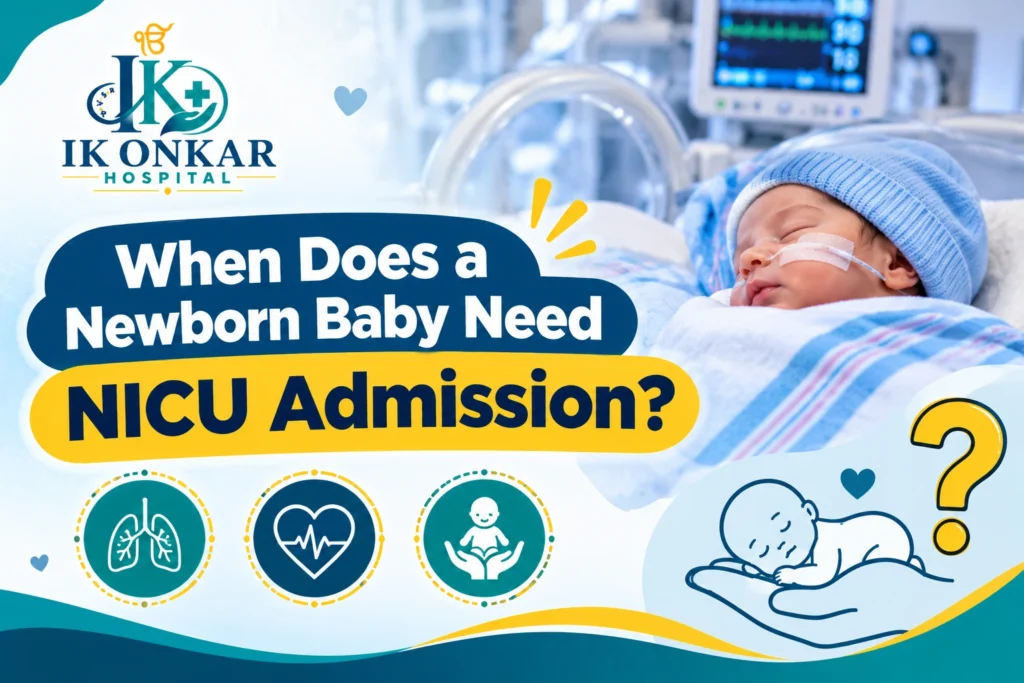
Not every baby needs intensive care. However, some babies need extra medical help right after birth. Others need it in the first few days of life. For example, premature birth, breathing trouble, infection, and feeding problems can lead to NICU admission.
Spotting warning signs early helps parents act fast. Still, a symptom does not always mean a baby needs the NICU. First, doctors check the whole picture. Then they choose routine care, special newborn care, or Newborn Intensive Care.
This guide explains when does a newborn need NICU admission. In addition, it covers urgent symptoms, newborn monitoring, and neonatal care after admission.
What Is NICU Admission?
NICU admission means moving a baby to a special hospital unit. There, a trained team watches the baby closely. Moreover, the team gives treatment and supports vital body functions.
A Neonatal Intensive Care Unit looks after premature and seriously ill babies. It also cares for babies who are medically fragile. Neonatal care may include breathing support, warmth, feeding help, and infection treatment. Meanwhile, newborn monitoring runs around the clock.
However, not every baby who needs attention needs intensive care. For instance, some babies do well in a postnatal ward. Others do well in a special newborn care unit. Therefore, the doctors choose the right level of care.
When Does a Newborn Need NICU Admission? Common Reasons
A baby needs NICU admission when the illness needs close watching or treatment. In other words, routine newborn care cannot safely provide it. Here are the most common reasons.
Premature Birth
A premature baby is born before 37 weeks of pregnancy. Because some organs are not fully grown, these babies struggle more. As a result, they may have trouble breathing, staying warm, and feeding. They also fight infection less well.
So, when does a newborn need NICU admission in this case? It depends on gestational age, weight, breathing, and feeding. In fact, not every premature baby needs intensive care.
Low Birth Weight
A baby under 2,500 grams at birth has low birth weight. Some of these babies find it hard to stay warm. They may also feed poorly or have low blood sugar.
However, weight alone does not decide NICU admission. Instead, doctors also check the baby’s maturity, vital signs, and overall health.
Newborn Breathing Problems
Newborn breathing problems are a major reason for urgent assessment. Often, they lead to Newborn Intensive Care.
Warning signs include:
- Fast or hard breathing
- Grunting sounds while breathing
- Skin pulling in around the ribs or chest
- Nostrils flaring with each breath
- Pauses in breathing or gasping
- Blue or grey colour around the lips or tongue
Some babies have weak lungs because they were born early. Others have an infection. Therefore, treatment depends on the cause. Doctors may use oxygen, CPAP, or a ventilator. Finally, the choice depends on how sick the baby is.
Suspected Infection or Neonatal Sepsis
Newborns have weak immune systems. Because of this, infections can turn serious very fast. Neonatal sepsis is a serious infection that spreads through a baby’s body.
Possible warning signs include:
- Poor feeding or refusing feeds
- Unusual sleepiness
- Fever or a very low body temperature
- Breathing trouble
- Convulsions
- A sudden change in behaviour
In such cases, doctors may order blood tests. They may also begin treatment and start newborn monitoring. Hence, a baby with a suspected serious infection needs a doctor right away.
Severe Newborn Jaundice
Jaundice turns the skin and eyes yellow. It happens when bilirubin builds up in the blood. Mild jaundice is common in newborns.
On the other hand, high or fast-rising bilirubin can be dangerous. Such babies may need phototherapy in hospital. Additionally, a few need stronger treatment.
Jaundice in the first 24 hours needs urgent care. Likewise, yellow palms and soles need urgent care. For this reason, parents should not judge severity by skin colour alone.
Low Blood Sugar
Low blood sugar is also called neonatal hypoglycaemia. It can cut a baby’s energy supply. Consequently, the baby may need testing and treatment.
Some babies face a higher risk. For example, small or premature babies are at higher risk. So are babies born to mothers with diabetes.
Signs include poor feeding, jitteriness, and unusual sleepiness. Seizures can also occur. Yet some babies show no signs at all. For this reason, doctors often test blood sugar when risk factors exist.
Feeding Difficulties and Dehydration
Some babies cannot suck, swallow, and breathe together. Others are too small or too sick to feed by mouth.
In that case, the team checks feeding, weight, and hydration. Then neonatal care may include tube feeds. It may also include expressed breast milk or fluids through a vein.
Above all, a baby who feeds poorly or sleeps through feeds needs prompt assessment.
Problems During Pregnancy or Delivery
Some problems before or during birth need extra care for the baby. Examples include:
- Trouble starting to breathe after delivery
- Major resuscitation at birth
- Signs of low oxygen supply
- Seizures or unusual nervous system signs
- Certain conditions present from birth
Ultimately, the decision depends on the baby’s condition and the care needed.
Warning Signs That Need Immediate Medical Attention
Some symptoms point to serious illness. Therefore, never ignore them. Seek urgent help if your baby:
- Stops feeding or feeds poorly
- Is very sleepy or hard to wake
- Breathes fast, hard, or unevenly
- Grunts or shows chest indrawing
- Turns blue, grey, or very pale
- Has a seizure
- Has a fever or feels cold
- Looks yellow within 24 hours of birth
Severe breathing trouble needs emergency care at once. The same applies to blue colour, seizures, or a baby who does not respond. Do not wait for more symptoms. Similarly, do not wait for a routine visit.
These signs match newborn danger-sign guidance from the World Health Organization and India’s National Health Mission. A baby with a danger sign needs urgent assessment. After that, the medical team decides the level of care. WHO | National Health Mission
How Do Doctors Decide on NICU Admission?
First, doctors look at the baby’s symptoms and age. Next, they check how much support the baby needs. This is the key step in deciding when does a newborn need NICU admission.
The assessment may include:
- Breathing check: Doctors look at breathing rate, effort, and oxygen level.
- Heart rate and circulation: They check heart rate, colour, and stability.
- Temperature: They see if the baby can stay warm.
- Feeding: They review sucking, swallowing, and hydration.
- Blood sugar: They test it when needed.
- Infection tests: They order blood tests if infection is likely.
- Jaundice check: They measure bilirubin when needed.
- Nervous system check: They watch alertness, movement, and muscle tone.
Not every baby needs every test. Instead, the tests depend on the symptoms.
Afterwards, the team picks the right level of care. The baby may stay under routine observation. Alternatively, the baby may need special newborn care or NICU admission. Sometimes, the baby moves to a hospital with higher neonatal care.
What Happens After NICU Admission?
After admission, the team makes a care plan. The plan fits the baby’s needs and the hospital’s facilities.
Care may include:
- Newborn monitoring of heart rate, breathing, oxygen, and temperature
- An incubator or warmer to keep the baby warm
- Oxygen, CPAP, or ventilator support for some breathing problems
- Breast milk feeds or tube feeds
- Fluids or medicines through a vein
- Blood tests to track progress
Every baby gets different treatment. Also, being on a monitor does not mean the baby is getting worse. Parents should ask what each treatment is for. In addition, they should ask how the baby is responding and what is needed before discharge.
How Long Does a Newborn Stay in the NICU?
There is no fixed stay. Some babies need only short newborn monitoring. In contrast, premature or very sick babies may stay for weeks or longer.
The stay depends on:
- How early the baby was born
- Birth weight and growth
- Need for breathing support
- Ability to stay warm
- Feeding and weight gain
- Infection or other illness
- Need for more treatment
Therefore, ask the team for an update on your own baby. A general estimate may not fit your child.
What Can Parents Do During a NICU Stay?
Parents are an important part of the care team. Even so, they should follow staff guidance. Depending on the baby’s condition, you may be able to:
- Visit and gently touch your baby
- Give expressed breast milk
- Learn feeding and basic newborn care
- Try skin-to-skin contact when it is safe
- Ask about newborn monitoring and progress
Always follow hand hygiene rules. Besides, do not touch tubes or machines without staff guidance. It is also fine to ask about visiting hours and daily updates.
NICU Hospital in Faridkot: What Should Parents Check?
Families who search for a NICU hospital in Faridkot should first understand their baby’s needs. After all, hospitals differ in neonatal care, equipment, and specialist cover.
Ik Onkar Hospital is at Former Dashmesh Hospital Building, Talwandi Road, Faridkot, Punjab.
Before choosing, call the hospital directly. Then confirm current NICU admission availability and the level of Newborn Intensive Care offered. Also ask whether your baby’s condition can be managed there.
Useful questions include:
- Is NICU admission available right now?
- Which newborn conditions can the team manage?
- What breathing and newborn monitoring support is available?
- Is a neonatal specialist available when needed?
- What is the referral process for higher care?
- How will parents get updates?
These answers help you decide with confidence. However, do not delay emergency care while you compare hospitals. If a baby shows serious warning signs, go to the nearest hospital at once.
Conclusion
Parents who know when does a newborn need NICU admission can act faster. Premature birth, low birth weight, newborn breathing problems, infection, severe jaundice, low blood sugar, and feeding trouble are common reasons. However, not every baby with these risks needs intensive care. Instead, doctors check each baby and choose the right level of neonatal care.
Likewise, families who need a NICU hospital in Faridkot should confirm current facilities first. Early assessment matters most when a baby looks seriously ill.
This article is for general education. It does not replace advice from a qualified doctor. If your newborn looks seriously unwell, seek emergency care immediately.