
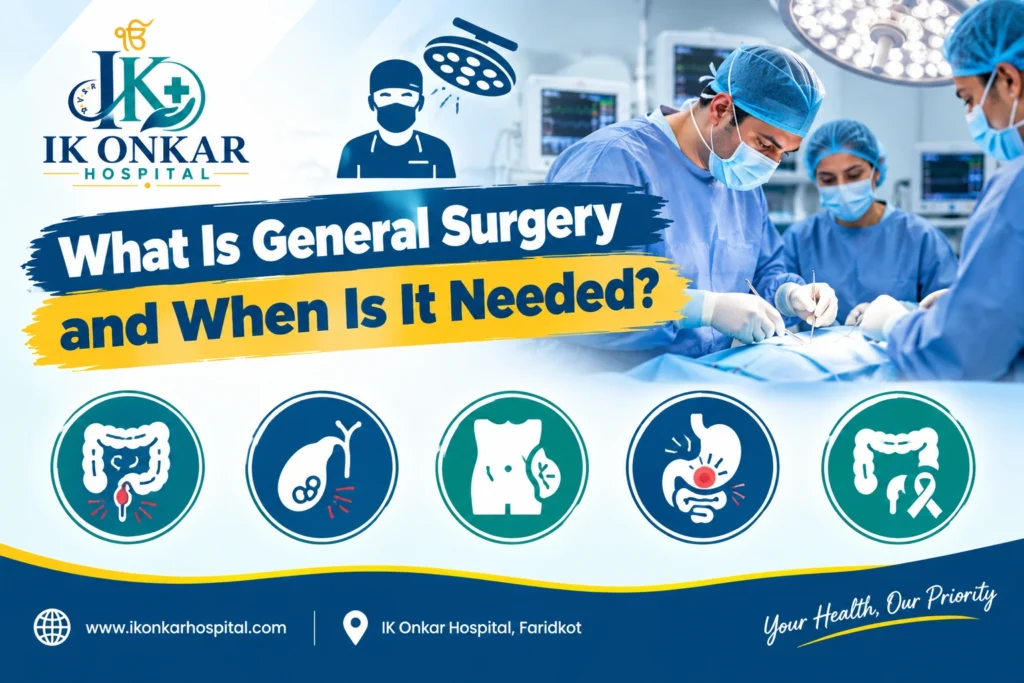
General surgery is a medical field that treats many common health problems. It covers the stomach, intestines, skin and soft tissues. It also covers some injuries. However, not every patient needs an operation. In many cases, medicine, tests or regular checkups are enough.
This guide explains what general surgery means. Next, it covers common conditions and how doctors find the problem. Finally, it shows what to expect from surgery care before and after an operation.
What Is General Surgery?
General surgery deals with diseases and injuries that may need an operation. First, a general surgeon checks your symptoms. Then the doctor orders tests and suggests the right surgical treatment.
Importantly, surgery is not always the first step. Instead, your surgeon may suggest medicine, rest or observation. Sometimes you may need another specialist. Some operations are planned in advance. Others are urgent.
Overall, the type of surgical treatment depends on your health, your condition and the hospital’s facilities.
Conditions That May Need General Surgery
The need for surgical treatment depends on how serious the problem is. Also, the doctor looks at your age and overall health. Here are some common conditions.
Appendicitis
Appendicitis means the appendix is swollen and painful. The pain often starts near the navel. Later, it moves to the lower right side of the belly. In addition, you may have fever, vomiting and loss of appetite.
This condition needs quick medical attention. Otherwise, the appendix can burst and cause serious infection. Therefore, do not wait at home. The usual surgical treatment is an operation to remove the appendix. It is called an appendectomy.
Gallbladder Problems
Gallstones are small hard stones in the gallbladder. They can cause pain in the upper right belly, especially after meals. However, some people never feel any symptoms. These people may not need treatment.
If the pain keeps coming back, the surgeon may suggest removing the gallbladder. This operation is called cholecystectomy. Meanwhile, your reports and symptoms help the doctor decide.
Hernias
A hernia happens when tissue pushes through a weak spot in the muscle. For example, you may see a bulge in the belly or groin. It may grow when you cough, stand or lift something heavy.
Some hernias can be watched for a while. On the other hand, others need general surgery. For this reason, the surgeon checks the size, the pain and the risk of problems.
Go to the emergency room if a hernia becomes very painful, hard or dark in colour. Moreover, vomiting or a swollen belly makes it more urgent.
Stomach and Bowel Conditions
Some stomach and bowel problems need a surgeon’s opinion. Examples include a blocked bowel and certain injuries inside the belly.
Watch for these warning signs. First, severe belly pain that keeps getting worse. Second, repeated vomiting. Third, a very swollen belly. Finally, not being able to pass stool or gas.
These signs can have many causes. Still, some of them are emergencies. Therefore, get checked quickly.
Lumps, Wounds and Abscesses
General surgeons also treat some lumps under the skin. Likewise, they handle abscesses and wounds. Depending on the problem, the doctor may drain pus or remove a lump. In some cases, a small sample is taken for testing.
Never assume a lump is harmless. Instead, see a doctor if it grows, hurts, bleeds or changes shape. Similarly, see a doctor if a wound does not heal.
Does Every Patient Need an Operation?
No. In fact, many people do well with simple treatment. Surgery is advised only when the benefits are greater than the risks.
For example, silent gallstones may only need watching. In the same way, some small hernias can be monitored. In contrast, appendicitis usually needs prompt surgical treatment.
Your surgeon should explain every option clearly. Also, ask why the doctor suggests a certain plan. Then ask what may happen if you wait. Above all, do not ignore symptoms just because the pain eased for a while.
How Do Doctors Find the Problem?
First, the doctor asks about your symptoms and past health. Next, you will be asked about medicines, allergies and earlier operations. After that, the doctor examines you.
Depending on your symptoms, you may need some tests. For instance, blood tests show infection, swelling or low blood count. In addition, an ultrasound checks the gallbladder, soft tissues and hernias. Meanwhile, a CT scan gives a detailed picture inside the belly.
However, not everyone needs every test. Therefore, ask your doctor why a test is needed.
Before Surgery: How to Prepare
Good surgery care starts before the operation. First, the team explains the procedure to you. Then they check your health and reports.
Before the day of surgery, tell the team about all your medicines and allergies. Also, share any health conditions you have. Next, follow the instructions about food and water. Additionally, ask about the benefits, risks and other options. Finally, arrange for someone to take you home.
Besides, do not stop your regular medicines on your own. Instead, ask your doctor first.
What Happens During Surgery?
The method depends on your condition. In open surgery, the surgeon makes one larger cut. By contrast, in laparoscopic surgery, the cuts are small. A thin camera and special tools are used.
However, laparoscopy does not suit everyone. Therefore, the surgeon chooses the safest method for you. Meanwhile, anaesthesia keeps you free from pain. The type depends on the surgery and your health.
Recovery and After-Surgery Care
Recovery time is different for every person. For example, a small procedure may need only a few days. In comparison, a bigger operation may take weeks. Still, good surgery care at home helps you heal faster.
First, keep the wound clean and dry. Next, take medicines on time. Also, eat and drink as the doctor advises. Then walk gently when allowed. Moreover, do not lift heavy things until the doctor says it is safe. Finally, go to every follow-up visit.
Call your doctor if you have more pain, spreading redness or fluid from the wound. Similarly, a fever that does not go away is a warning sign.
In contrast, go to the emergency room right away for trouble breathing, chest pain, heavy bleeding or fainting.
When to Go to the Emergency Room
Some symptoms need help right away. Do not wait for a routine appointment.
Get urgent care for severe belly pain that keeps getting worse. Likewise, go quickly if belly pain comes with repeated vomiting or swelling. Also, a painful, hard or dark hernia needs urgent care. In addition, heavy bleeding that will not stop is an emergency. Similarly, a deep wound or a suspected internal injury needs help at once. Finally, fainting, confusion or trouble breathing are danger signs.
Of course, this list is not complete. Therefore, if someone looks very unwell, call emergency services or go to the nearest hospital.
General Surgery in Faridkot
If you need general surgery in Faridkot, check a few things first. For instance, look at how urgent your problem is. Also, confirm that the hospital offers the care you need.
Ik Onkar Hospital is in the Former Dashmesh Hospital Building, Talwandi Road, Faridkot, Punjab. Before you visit, call the hospital. Then ask if general surgery Faridkot consultations are available for your condition.
You can also ask a few simple questions. First, which doctor will see me? Next, which tests will I need? Then, is anaesthesia support available? Besides, will I need to stay in the hospital? Finally, what follow-up care will I get? Moreover, ask what happens if you need a higher level of care.
For a planned operation, ask about the full cost. Also, find out what the estimate includes. Furthermore, ask whether tests, medicines or follow-up visits cost extra. After all, the hospital can give you the most accurate figure.
In an emergency, however, go for urgent help straight away. Do not wait for an appointment.
Conclusion
General surgery covers many conditions. For example, it includes appendicitis, gallbladder problems, hernias, belly problems and some lumps. However, it does not always mean an operation. Ultimately, the right surgical treatment depends on a proper check by a qualified doctor.
If you are looking for general surgery in Faridkot, ask about the services, the plan, the risks and the recovery. Also, remember that surgery care continues after the operation. Therefore, follow your doctor’s advice closely. Above all, if symptoms become severe, seek emergency help at once.
This article is for general information only. It does not diagnose any condition. Likewise, it is not a replacement for advice from a qualified doctor.