
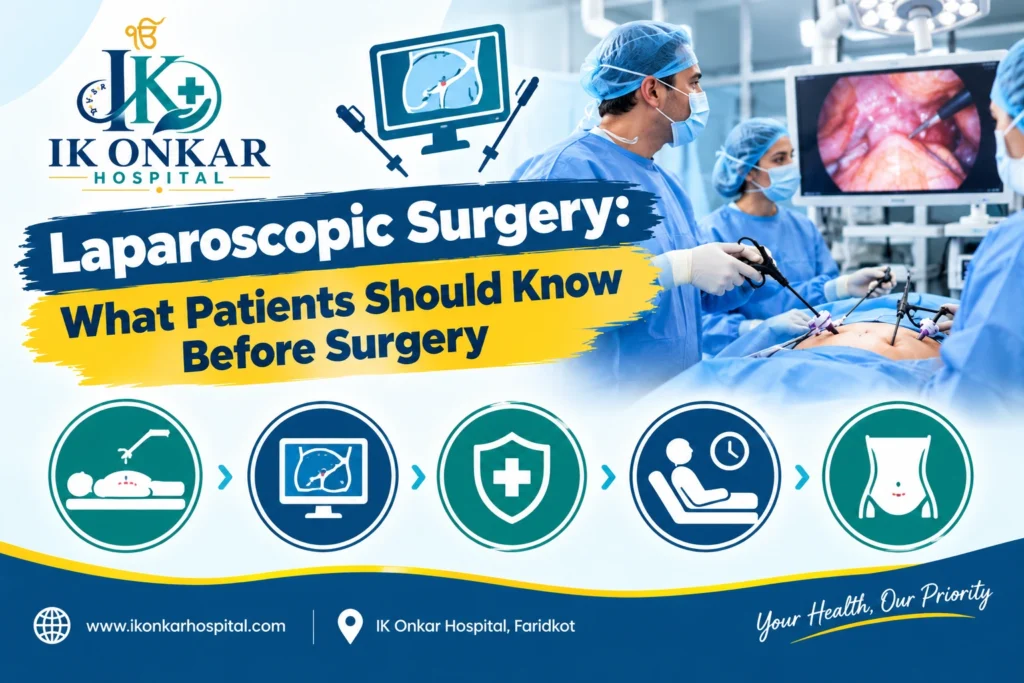
Laparoscopic surgery is a type of minimally invasive surgery. The surgeon makes small cuts. A tiny camera shows the inside of the body. Thin tools do the work. This suits some belly and pelvic problems. However, the right choice depends on your health and your condition.
Your doctor may suggest surgery. In that case, learn how laparoscopy works. This guide covers each step, from planning to recovery. Also, it lists questions to ask your surgeon.
What Is Laparoscopic Surgery?
Laparoscopic surgery uses a thin tube called a laparoscope. A small camera sits at its tip. It sends live pictures to a screen. While watching, the surgeon guides the tools.
People also call it keyhole surgery. Compared with open surgery, the cuts are smaller. For this reason, surgeons use it for selected operations in the belly and pelvis.
Diagnostic laparoscopy is for finding a problem. The surgeon looks at your organs. Operative laparoscopy goes further. For example, it can remove an organ or fix a hernia.
Still, not every problem suits this method. So your surgeon will weigh the pros and cons for you.
How Is Laparoscopic Surgery Performed?
Steps differ from one operation to another. Even so, most laparoscopic surgery follows a similar path.
- Anaesthesia: Most patients sleep through the operation. Meanwhile, the team checks your vital signs.
- Small cuts: Next, the surgeon makes a few small cuts.
- Camera: Then the laparoscope goes in through one cut. It shows clear pictures on a screen.
- Working space: The team fills the belly with gas. As a result, the surgeon gets more room.
- Treatment: Thin tools go in through other cuts. With them, the surgeon does the planned operation.
- Closing: After that, the team takes out the tools and the gas. Finally, they close the cuts.
- Recovery room: Nurses stay with you as the anaesthesia wears off. They check your pain and nausea.
Some operations take longer. Occasionally, the surgeon must switch to open surgery. This happens only when it is the safest way to finish.
Which Conditions Can Laparoscopy Treat?
Surgeons use laparoscopy for many problems. The choice depends on your needs.
- Gallbladder disease: Laparoscopic gallbladder surgery is common.
- Appendicitis: Surgeons can often remove the appendix this way.
- Hernias: Laparoscopic hernia repair suits some hernias.
- Women’s health: Some ovarian cysts and endometriosis can be treated this way.
- Unclear symptoms: Diagnostic laparoscopy helps when tests give no answer.
- Other operations: Some stomach and bowel operations use it too.
This list is not advice for one person. Your body, past operations, and the urgency all matter. Besides, your hospital’s team matters too.
What Are the Benefits of Minimally Invasive Surgery?
For the right operation, minimally invasive surgery has clear gains over open surgery.
- Smaller cuts and scars
- Less pain after some operations
- Shorter hospital stay
- Quicker return to daily life
Even so, it is not risk-free. Benefits differ from person to person. Some operations are hard, so recovery may take longer. Therefore, ask your surgeon what to expect. Ask, too, if open surgery might suit you better.
What Are the Risks of Laparoscopic Surgery?
Every operation has risks. Your risk depends on the operation and your health.
- Bleeding
- Infection
- Injury to nearby organs or blood vessels
- Blood clots
- Problems from anaesthesia
- Hernia at a cut
- Switch to open surgery
Some patients cannot have laparoscopy. For example, old scars or certain health problems may rule it out. Before you agree, ask about the pros, cons, and other options. Also, ask what happens if the surgeon cannot finish this way.
How Should You Prepare for Laparoscopic Surgery?
Good planning helps your team. Moreover, it lowers risk. Always follow your surgeon’s advice.
Share Your Medical History
Tell your team about:
- Health problems such as diabetes or heart disease
- Past operations and any trouble with anaesthesia
- Allergies
- All medicines, vitamins, and herbal products
- Pregnancy, or the chance of it
- Recent fever or infection
Never stop your medicines on your own. This matters most for blood thinners and diabetes medicines. Instead, your doctor will tell you what to change.
Follow the Fasting Rules
Your team will tell you when to stop eating and drinking. The time depends on your operation. Therefore, follow the hospital’s advice, not tips from the internet. If you are unsure, ask the team. Besides, you may need blood tests first.
Plan Help at Home
Anaesthesia can leave you drowsy. So ask an adult to take you home. Next, set up a quiet place to rest. In addition, ask family to help with meals and chores.
What Happens During Recovery from Laparoscopic Surgery?
Recovery depends on the operation and your health. For example, some people go home the same day. Others stay longer.
Common short-term effects include:
- Sore cuts
- Bloating in the belly
- Tiredness or mild nausea
- Sore throat from the breathing tube
- Shoulder pain from the gas
These effects usually fade. Meanwhile, follow your discharge notes closely.
Practical Recovery Tips
- Wound care: Keep the cuts clean and dry.
- Movement: Gentle walking helps, but do not overdo it.
- Food: Some operations need a slow return to normal meals.
- Medicines: Take only the pain relief your doctor approves.
- Heavy work: Ask when you can lift, drive, or return to work.
- Follow-up: Attend every visit, so your surgeon can check healing.
No single timeline fits every laparoscopic surgery. A small test heals fast. In contrast, a major operation takes much longer.
When Should You Call a Doctor After Surgery?
Call your surgical team fast if a symptom gets worse or feels odd.
- Fever or chills
- Rising pain or swelling in the belly
- Constant vomiting
- Redness, heat, or pus at a cut
- Bleeding that does not stop
- New trouble passing urine
- Pain or swelling in one leg
Go to the emergency room for chest pain, severe breathing trouble, or fainting. In these cases, do not wait for a routine visit. Remember that a symptom alone does not show the cause. Only a doctor can tell.
How Do You Choose a Hospital for Laparoscopic Surgery in Faridkot?
If you want laparoscopic surgery Faridkot, start with your problem. Then talk with a laparoscopic surgeon in Faridkot about the plan.
Useful questions include:
- Why do I need surgery, and what are the other options?
- Is laparoscopy right for my condition?
- Do the pros and cons differ for this operation?
- Which type of anaesthesia will you use?
- How long will I stay in hospital?
- Who will help with follow-up care?
- If laparoscopy cannot be completed, what is the backup plan?
- Will the cost estimate cover everything?
Also, check the hospital’s team, equipment, and after-care. In fact, good care after surgery matters as much as the operation.
Ik Onkar Hospital is in the Former Dashmesh Hospital Building on Talwandi Road, Faridkot, Punjab. Please contact the hospital directly. Ask whether your laparoscopy Faridkot operation is offered there. Also, ask which surgeon does it and how check-ups work. Not every hospital offers every laparoscopic operation. Therefore, confirm the details first.
Conclusion
Laparoscopic surgery is a form of minimally invasive surgery. It uses small cuts, a camera, and thin tools. For some patients, it means smaller scars and quicker recovery. However, it has risks, and it does not suit every condition.
Before you decide, talk with your doctor about the reason for surgery, the other options, and recovery. If you want minimally invasive surgery Faridkot, confirm that the hospital offers your operation. In short, ask early and choose the care that fits you.
This article is for general education. It does not replace advice from a qualified doctor.