
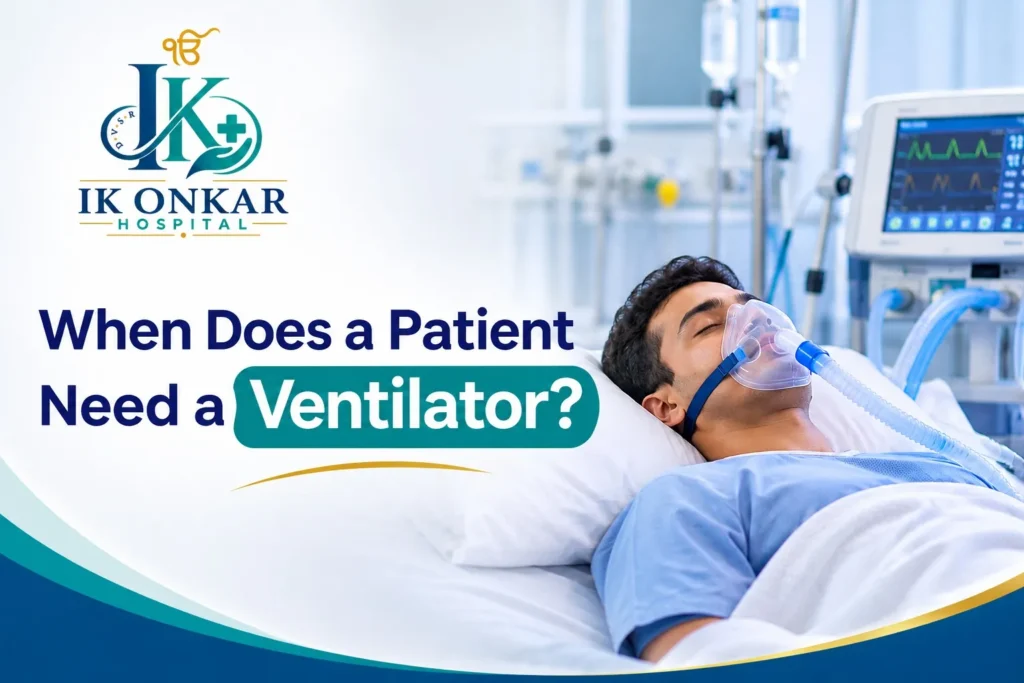
When is a ventilator needed? Doctors use it when a patient cannot breathe well alone. It helps if oxygen stays low. It also helps if carbon dioxide builds up in the body.
Hearing the word “ventilator” can scare a family. However, clear facts can ease that fear. Families often ask why the machine is needed. They also ask how it works and whether the patient will recover.
So this guide explains when a ventilator is needed. It covers the reasons for ventilator support. It also shows how doctors decide and what happens in the ICU.
What Is a Medical Ventilator?
A medical ventilator is a machine that helps a patient breathe. It pushes air into the lungs. Then it lets the air flow out. If needed, it adds extra oxygen too.
Ventilator support is also called mechanical ventilation. Doctors can give it in three ways:
- Breathing mask: Non-invasive ventilation gives support through a mask. The mask covers the nose, the mouth, or both.
- Breathing tube: In invasive ventilation, the doctor places a tube in the windpipe. Usually, it goes in through the mouth. Then the tube connects to the machine.
- Tracheostomy tube: Some patients need support for a long time. In that case, the doctor places a tube through a small opening in the neck.
The best method depends on the patient’s condition. Doctors also check how alert the patient is. In addition, they check whether the patient can keep the airway safe.
A ventilator does not cure the illness. Instead, it supports breathing. Meanwhile, doctors treat the cause.
When Is a Ventilator Needed?
When is a ventilator needed? A patient may need one if the body gets too little oxygen. A patient may also need one if carbon dioxide builds up. Likewise, it may be needed if the airway is not safe.
Doctors look at the whole picture. They do not rely on one symptom. They also do not rely on one test. Here are the common reasons for ventilator support.
1. Severe Breathing Difficulty
Sometimes breathing becomes very hard. The breathing muscles may get tired. Or the lungs may fail to pass oxygen into the blood.
Doctors check the breathing rate and effort. They also check oxygen levels and blood gas results. Then they watch how the patient responds to early treatment. As a result, the support may range from simple oxygen to a ventilator.
2. Respiratory Failure
Respiratory failure means the lungs cannot supply enough oxygen. It can also mean they cannot remove enough carbon dioxide. Some patients have both problems.
It can start suddenly. In other cases, it grows out of an existing lung problem. If other treatments fail, doctors may start ventilator treatment.
3. Severe Pneumonia or ARDS
Severe pneumonia inflames the lungs. It also fills parts of them with fluid. Because of this, oxygen cannot pass into the blood easily.
Acute respiratory distress syndrome (ARDS) is even more serious. Widespread swelling damages the lungs. Therefore, many ARDS patients need a ventilator while doctors treat the cause.
4. Sepsis and Serious Infections
Sepsis is a life-threatening reaction to infection. It can harm many organs at once. In severe cases, it weakens breathing or lowers alertness.
A patient with sepsis may need ICU ventilator support. This happens if breathing fails. Meanwhile, the team treats the infection and supports the other organs.
5. Brain Injury, Stroke, or Low Consciousness
Some brain problems affect breathing. Others stop a patient from keeping the airway safe. For example, severe head injury, some strokes, and long seizures can do this.
However, not every stroke needs a ventilator. The same is true for brain injury. The doctor decides after checking the brain and the breathing.
6. During Some Surgeries
General anaesthesia can stop normal breathing for a short time. For this reason, the anaesthesia team often uses a ventilator during surgery.
This use is planned and controlled. The team watches the patient closely. Also, they adjust the support when needed.
When Does a Patient Need a Ventilator? Warning Signs
When does a patient need a ventilator? Some signs point to a serious breathing problem. These include:
- Severe breathlessness or very hard breathing
- Fast, shallow, or uneven breathing
- Trouble speaking full sentences
- Blue or grey lips or skin
- Growing sleepiness, confusion, or poor response
- Signs of exhaustion after a long struggle to breathe
- Abnormal oxygen or carbon dioxide levels in tests
These signs do not always mean a ventilator is required. Still, they show the patient needs urgent care. So do not wait for every sign to appear.
How Does a Ventilator Work?
The ventilator delivers air or oxygen-rich air. The medical team sets the controls. These settings decide the air volume and the pressure. They also decide the number of supported breaths.
The machine moves air into the lungs. In addition, it can help remove carbon dioxide. This depends on the settings and on how well the lungs work.
In the ICU, nurses and doctors watch the patient all the time. First, they examine the patient. Then they check oxygen levels. If needed, they also order blood tests. After that, they change the settings to suit the patient.
The goal is simple. The team gives enough support. At the same time, they avoid extra pressure or extra oxygen.
Oxygen Therapy vs Ventilator Support
Many people mix up the two. However, they are different treatments.
Oxygen therapy raises the oxygen a patient breathes in. Doctors give it through a nasal tube or a mask. Patients who can breathe alone often use it.
Ventilator support, on the other hand, helps with the act of breathing itself. It can give mechanical breaths. Doctors use it when breathing is weak. They also use it when the airway is not safe.
Some patients need only oxygen. Others need mask or tube ventilation. So the right choice depends on the cause and the severity.
How Do Doctors Decide When a Ventilator Is Needed?
Doctors weigh several factors before they suggest ventilator support:
- Breathing effort: Is the patient struggling or getting tired?
- Oxygen level: Is oxygen still low despite early treatment?
- Carbon dioxide level: Is the patient holding too much of it?
- Blood gas results: These tests show oxygen, carbon dioxide, and acid-base balance.
- Alertness and airway safety: Can the patient stay awake enough to protect the airway?
- Underlying illness: Is pneumonia, sepsis, or injury affecting breathing?
Doctors also see how the patient responds to oxygen or mask support. In an emergency, they may start the ventilator quickly.
No single number decides when a ventilator is needed. Instead, the doctor looks at the patient’s overall condition.
How Long Can a Patient Stay on a Ventilator?
How long can a patient stay on a ventilator? There is no fixed time. Some patients need it for a few hours or days. Others need it for weeks or longer.
The time depends on several things:
- The illness or injury behind the breathing problem
- How badly the lungs or other organs are affected
- How well the patient responds to treatment
- Whether the patient can breathe without help
- The patient’s general health
The ICU team checks every day whether the patient can use less support. Therefore, families should ask the doctor what affects the time in their own case.
Possible Risks of Ventilator Treatment
A ventilator can save a life. Still, it carries some risks. These depend on the patient’s condition. They also depend on the type of support and how long it lasts.
- Ventilator-associated pneumonia: A lung infection that can develop during tube ventilation.
- Airway irritation or injury: The tube can irritate the airway.
- Lung injury: Too much pressure can harm weak lungs.
- Muscle weakness: Serious illness and long bed rest can weaken muscles.
- Confusion or delirium: Some ICU patients feel confused for a short time.
- Trouble coming off the machine: Some patients need a slow, step-by-step cut in support.
To lower these risks, the ICU team monitors patients closely. They also choose careful settings and follow infection-control steps. Besides, they review the plan often.
What Happens When the Patient Gets Better?
As the patient improves, doctors reduce the support. This step is called ventilator weaning.
First, the team checks breathing, oxygen need, blood pressure, and alertness. Next, they may run a spontaneous breathing trial. This test shows whether the patient can breathe with less help.
If the patient passes, the doctor removes the breathing tube. This is called extubation. Some patients still need oxygen or mask support afterwards.
However, not everyone comes off the ventilator right away. Some need more treatment. Others need repeated checks. The treating team decides the right timing.
When to Seek Emergency Care
Severe breathing trouble can become life-threatening within minutes. Get emergency help at once if a person:
- Struggles hard to breathe
- Has blue or grey lips, tongue, or skin
- Becomes unconscious or hard to wake
- Has very abnormal breathing or stops breathing
- Has sudden severe breathlessness with chest pain or collapse
In India, call 112 for emergency help. If an ambulance is available, use it. Do not move an unstable patient on your own.
Also, do not wait until a ventilator is needed. Early care helps doctors find the cause. As a result, treatment can start sooner.
Ventilator Treatment in Faridkot: ICU and Critical Care
Families who search for ventilator treatment in Faridkot should first check the hospital’s current facilities. Not every hospital offers the same level of critical care.
Ik Onkar Hospital is at Former Dashmesh Hospital Building, Talwandi Road, Faridkot, Punjab. If a patient may need ICU ventilator support, call the hospital first. Then ask these questions:
- Is ventilator support available right now?
- Can the hospital manage the patient’s condition?
- What monitoring and medical support does the Medical ICU in Faridkot provide?
- Will a specialist need to see the patient, or is a referral needed?
- How does the hospital handle emergency admission and family updates?
The right hospital depends on the patient’s condition. It also depends on the support required. However, never delay emergency care while you compare hospitals. If the patient struggles to breathe or stops responding, go to the nearest emergency department at once.
Conclusion
Knowing when a ventilator is needed helps families understand the doctor’s advice. Doctors may suggest ventilator support for respiratory failure. They may also suggest it for severe pneumonia, ARDS, serious infection, brain problems, or surgery.
A ventilator supports breathing while the team treats the real cause. The time on the machine differs for every patient. So the outcome differs too. Therefore, talk openly with the treating team. Ask about the patient’s condition, the goals of treatment, the risks, and the progress.
This article gives general health information. It does not replace a medical check-up or advice from a qualified doctor.
Stay Connected with Ikonkar Hospital
Stay connected with Ikonkar Hospital for healthcare updates, health awareness information, patient care guidance, and useful wellness tips. Visit our website to learn more about our hospital and services. Follow Ikonkar Hospital on Facebook and Instagram for the latest health updates, hospital news, and informative healthcare content.