For years, families in Faridkot have had to travel to Bathinda, Ludhiana or Amritsar for serious medical problems. That journey costs time, money and, in an emergency, something more valuable than either. A patient who needs a ventilator, a newborn who needs intensive care, or an accident victim who needs surgery within the golden hour cannot always wait for a two-hour drive.
Ik Onkar Hospital has changed that. The hospital, built on the site of the former Dashmesh Hospital building on Talwandi Road, is now fully functional as a super speciality hospital in Faridkot. It brings emergency care, critical care, surgery, maternity, newborn care and specialist consultations together under one roof.
This guide explains what advanced health services actually means, which departments are available, and how families in Faridkot and the surrounding villages can use them.
What Are Advanced Health Services?
“Advanced health services” is not a marketing phrase. It describes care that needs four things working together: trained specialists, critical-care units, modern operation theatres, and the equipment to diagnose and monitor patients properly.
A small clinic can treat a fever or a fracture. It cannot manage a patient on a ventilator, perform laparoscopic surgery, or keep a premature baby warm and monitored through the night. Those services need a hospital with dedicated units, round-the-clock staff and the infrastructure to support them.
That is the difference between a hospital and a super speciality hospital. The term means the hospital offers specialist care across multiple departments, not just general medicine, and has the backup systems, such as an ICU and a blood arrangement, that complex treatment depends on.
Why a Super Speciality Hospital in Faridkot Matters
Faridkot is not a small town without medical facilities, but specialist care has historically meant travelling out. That creates three problems.
Delay in emergencies. In a road accident, a heart problem or a difficult delivery, the first sixty minutes decide the outcome. A long drive removes that hour.
Interrupted follow-up. Patients who need dialysis twice a week, chemotherapy cycles or post-surgery check-ups cannot repeat a long journey easily. Many simply stop going.
Cost of travel. For a family, an ambulance, fuel, food and a stay in another city can cost more than the treatment itself.
Having advanced services in Faridkot solves all three. It also means local doctors can admit a patient, involve a specialist the same day, and keep the family close by during recovery.
Services Available at Ik Onkar Hospital
The hospital runs a range of departments in Faridkot, covering emergency medicine, surgery, critical care, maternity, paediatrics and specialist consultation. Each department works with the others, which matters when a patient has more than one problem.
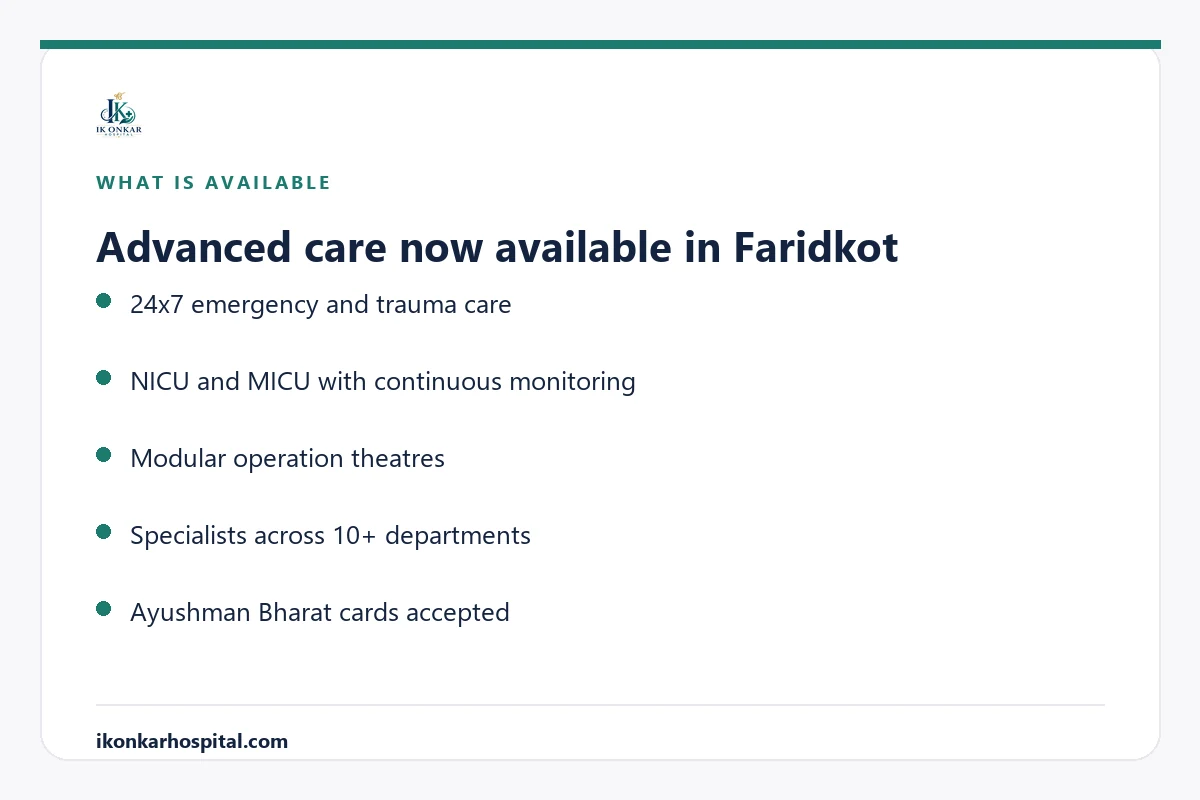
24×7 Emergency and Trauma Care
The emergency and trauma department works round the clock, every day of the week. Road accident injuries, fractures, sudden chest pain, breathing difficulty and other urgent cases are received at any hour. Emergency care works best when a hospital can move a patient straight into imaging, then to an operation theatre or the ICU without a transfer.
You can read more about the hospital’s approach on the trauma and accident care page.
Critical Care: MICU and NICU
Critical care is what separates a serious hospital from a basic one. Ik Onkar Hospital has a dedicated MICU for adults and a NICU for newborns, both with continuous monitoring.
The MICU supports patients who need oxygen, ventilator support or close observation after surgery. The NICU is built for premature and low-birth-weight babies, who need controlled temperature, feeding support and monitoring in their first days. Having both units in the same building as the operation theatres means a newborn or a post-operative patient does not need to be moved to another city.
General and Laparoscopic Surgery
The hospital performs both open and laparoscopic procedures. Laparoscopic, or keyhole, surgery uses small incisions, which usually means less pain and a shorter recovery. Common procedures include gallbladder removal, hernia repair, appendix surgery and other abdominal operations.
Details of the department are on the general and laparoscopic surgery page.
Orthopaedics and Joint Replacement
Joint pain, fractures and sports injuries are common in every age group. The orthopaedics department handles trauma and accident cases, joint replacement and corrective procedures, with consultants experienced in complex bone and joint surgery.
See the orthopaedics and joint replacement page for the full scope of treatment.
Cancer Surgery and Chemotherapy
Cancer treatment needs continuity: diagnosis, surgery, chemotherapy and follow-up should happen close to home. The hospital offers cancer surgery and chemotherapy support through its cancer surgery and chemotherapy department, so patients do not have to travel for every cycle.
Maternity and Newborn Care
Maternity care covers antenatal check-ups, delivery and post-natal care. Because the gynaecology and maternity department is in the same building as the NICU, a newborn who needs extra support can be shifted within minutes rather than hours.
Paediatrics
Children are not small adults. Their illnesses change quickly, and dosages, equipment and monitoring all differ. The paediatrics department handles newborn care, childhood infections, growth concerns and immunisation guidance.
Parents should also know the warning signs that need immediate medical attention. Our guide on danger signs in a newborn explains them in plain language.
ENT Care
The ENT department treats ear, nose and throat problems, including chronic infections, hearing concerns, sinus issues and tonsil conditions. See the ENT page for details.
Dialysis and Diabetes Management
Kidney and diabetes care are long-term commitments. The hospital runs a dialysis unit and a diabetes department, so patients can receive regular treatment without travelling each time. Families who are new to dialysis can read our guide on questions to ask before starting dialysis.
Experienced Doctors and Trained Staff
Equipment alone does not treat patients. The hospital’s consultant panel includes specialists in orthopaedics, neurosurgery, general surgery, oncology, pulmonology, internal medicine, paediatrics, neonatology, obstetrics and gynaecology, ENT, plastic surgery and urology.
Among the consultants are Dr. Varun Garg (neuro surgery), Dr. Kanwarjeet Singh (onco surgery), Dr. Raina Jain (obstetrics and gynaecology), Dr. Vikramjot Singh and Dr. Ajlal Hassan (paediatrics and neonatology), and Dr. Divyansh Gupta and Dr. Bini Garg (orthopaedics). The full list, with qualifications, is on the doctors page.
Just as important is the team behind the doctors: nurses trained in critical care, technicians who run the imaging and laboratory equipment, and staff who manage admission, insurance and discharge. In a hospital, most of the patient’s day is spent with them, not with the surgeon.
Modern Equipment and Modular Operation Theatres
Surgery is only as safe as the theatre it happens in. The hospital has modular operation theatres, which are designed for controlled airflow, easy cleaning and a sterile environment. Anaesthesia support and access to the MICU and NICU on the same premises add a layer of safety for higher-risk patients.
Imaging, laboratory and monitoring equipment support diagnosis and follow-up. More detail is available on the facilities page.
Ayushman Bharat and Affordable Care
Advanced care is only useful if families can afford it. Ik Onkar Hospital accepts Ayushman Bharat cards, with free treatment for eligible patients under the ₹5 lakh and ₹10 lakh schemes. Patients should carry their card and identity proof when they come.
If you are unsure whether your card applies to a particular treatment, ask at the reception before admission. The team can check eligibility and explain what is covered.
What This Means for Families in Faridkot
For a family in Faridkot, the practical difference is simple. A child with high fever can be seen by a paediatrician the same day. A pregnant woman can deliver in a hospital with a NICU upstairs. A dialysis patient can complete treatment and be home for lunch. An accident victim can reach an operation theatre within minutes of arrival.
It also changes how local doctors work. A general practitioner can refer a patient to a specialist in the same city, review the reports, and stay involved in follow-up. That continuity is difficult when patients are sent to another district.
How to Reach Ik Onkar Hospital
The hospital is located at the former Dashmesh Hospital building, Talwandi Road, Faridkot, Punjab 151203. The emergency department is open 24 hours.
For appointments and general enquiries, call 708-790-2255 or 708-790-4448. You can also write to ikonkarhospital.official@gmail.com or use the form on the contact page.
For an emergency, it is better to call while you are on the way so the team can prepare before the patient arrives.
Frequently Asked Questions
What does super speciality hospital mean?
It means the hospital offers specialist care in several departments, such as surgery, orthopaedics, oncology, paediatrics and critical care, rather than only general medicine. It usually includes an ICU, operation theatres and specialist consultants.
Is emergency care available at night in Faridkot?
Yes. The emergency and trauma department at Ik Onkar Hospital works 24 hours a day, seven days a week.
Does the hospital accept Ayushman Bharat cards?
Yes. Free treatment is available for eligible patients under the ₹5 lakh and ₹10 lakh Ayushman Bharat schemes. Carry your card and identity proof.
Which specialists are available?
Consultants cover orthopaedics, neurosurgery, general and laparoscopic surgery, onco surgery, pulmonology, internal medicine, paediatrics, neonatology, obstetrics and gynaecology, ENT, plastic surgery and urology.
Can I get dialysis close to home?
Yes. The hospital has a dialysis unit in Faridkot, so patients do not need to travel to another city for regular sessions.
ਫਰੀਦਕੋਟ ਵਿੱਚ ਹਸਪਤਾਲ ਬਾਰੇ ਆਮ ਸਵਾਲ
ਐਮਰਜੈਂਸੀ ਸੇਵਾ ਕਦੋਂ ਉਪਲਬਧ ਹੈ?
ਸਾਡਾ ਐਮਰਜੈਂਸੀ ਅਤੇ ਟਰਾਮਾ ਵਿਭਾਗ ਹਫ਼ਤੇ ਦੇ ਸੱਤੇ ਦਿਨ, 24 ਘੰਟੇ ਖੁੱਲ੍ਹਾ ਰਹਿੰਦਾ ਹੈ। ਸੜਕ ਹਾਦਸੇ ਜਾਂ ਅਚਾਨਕ ਬਿਮਾਰੀ ਵਿੱਚ ਮਰੀਜ਼ ਨੂੰ ਸਿੱਧਾ ਹਸਪਤਾਲ ਲਿਆਇਆ ਜਾ ਸਕਦਾ ਹੈ।
ਕੀ ਆਯੁਸ਼ਮਾਨ ਭਾਰਤ ਕਾਰਡ ਨਾਲ ਇਲਾਜ ਹੋ ਸਕਦਾ ਹੈ?
ਹਾਂ। ਯੋਗ ਮਰੀਜ਼ਾਂ ਲਈ ₹5 ਲੱਖ ਅਤੇ ₹10 ਲੱਖ ਦੇ ਆਯੁਸ਼ਮਾਨ ਭਾਰਤ ਕਾਰਡਾਂ ‘ਤੇ ਮੁਫ਼ਤ ਇਲਾਜ ਦੀ ਸੁਵਿਧਾ ਹੈ। ਆਉਣ ਵੇਲੇ ਆਪਣਾ ਕਾਰਡ ਅਤੇ ਪਛਾਣ ਪੱਤਰ ਨਾਲ ਲਿਆਓ।
ਹਸਪਤਾਲ ਕਿੱਥੇ ਹੈ ਅਤੇ ਸੰਪਰਕ ਨੰਬਰ ਕੀ ਹੈ?
ਇਕ ਓਂਕਾਰ ਹਸਪਤਾਲ, ਸਾਬਕਾ ਦਸ਼ਮੇਸ਼ ਹਸਪਤਾਲ ਬਿਲਡਿੰਗ, ਤਲਵੰਡੀ ਰੋਡ, ਫਰੀਦਕੋਟ (ਪੰਜਾਬ) 151203 ਵਿੱਚ ਹੈ। ਫ਼ੋਨ: 708-790-2255 ਜਾਂ 708-790-4448।
ਕੀ ਨਵਜਾਤ ਬੱਚਿਆਂ ਅਤੇ ਗਰਭਵਤੀ ਔਰਤਾਂ ਲਈ ਸੁਵਿਧਾ ਹੈ?
ਹਾਂ। NICU ਵਿੱਚ ਨਵਜਾਤ ਬੱਚਿਆਂ ਦੀ ਵਿਸ਼ੇਸ਼ ਨਿਗਰਾਨੀ ਹੁੰਦੀ ਹੈ, ਅਤੇ ਗਾਇਨੀਕੋਲੋਜੀ ਤੇ ਮੈਟਰਨਿਟੀ ਵਿਭਾਗ ਵਿੱਚ ਗਰਭਵਤੀ ਔਰਤਾਂ ਦੀ ਦੇਖਭਾਲ ਕੀਤੀ ਜਾਂਦੀ ਹੈ।
ਕੀ ਡਾਇਲਸਿਸ ਦੀ ਸੁਵਿਧਾ ਉਪਲਬਧ ਹੈ?
ਹਾਂ, ਹਸਪਤਾਲ ਵਿੱਚ ਡਾਇਲਸਿਸ ਯੂਨਿਟ ਹੈ, ਤਾਂ ਜੋ ਮਰੀਜ਼ਾਂ ਨੂੰ ਹਰ ਵਾਰ ਦੂਜੇ ਸ਼ਹਿਰ ਨਾ ਜਾਣਾ ਪਵੇ।
Conclusion
Advanced health services in Faridkot are no longer a promise for the future. Ik Onkar Hospital is running a super speciality setup with emergency care, critical care, surgery, maternity, paediatrics and specialist consultants, supported by a trained team and Ayushman Bharat acceptance.
For families in the city and nearby villages, the practical benefit is time. Time to reach a doctor, time to start treatment, and time to recover close to home.
Call 708-790-4448 for appointments, or visit the hospital on Talwandi Road. For emergencies, the department is open 24 hours. You can also see the about page or contact us.